
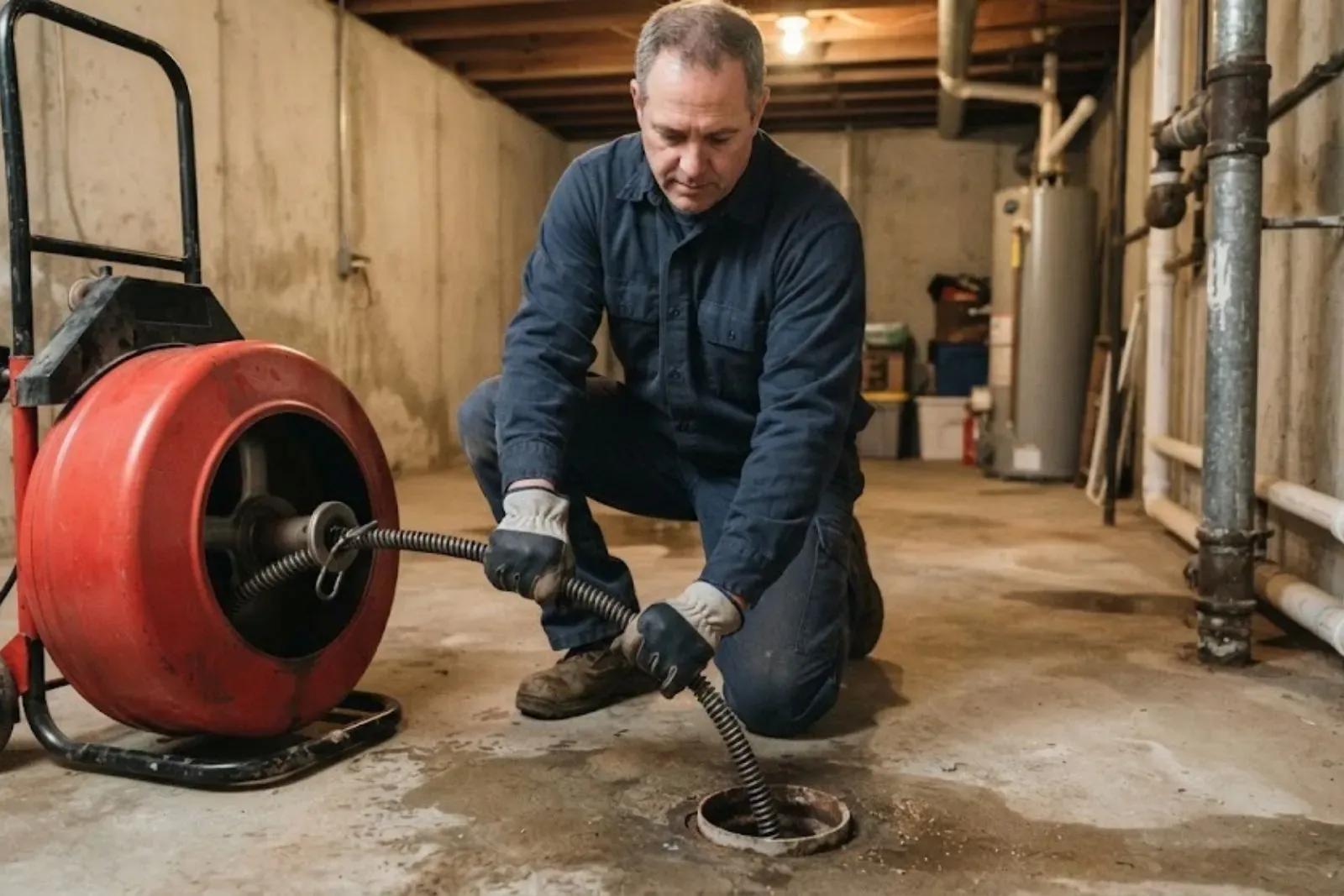
Drain cleaning in Erlanger, KY means removing whatever is blocking a drain line so water can leave the house again. That might be a hairball in a tub trap, a grease plug in a kitchen branch, or roots in a buried pipe.
A slow drain and a dead-stopped drain can look alike at first. The difference is where the blockage sits and how far the plumber has to reach. Our plumbers start by figuring that out, then pick the tool that fits the pipe instead of running the same machine on every job.
Backed-up drain right now: what to do before the plumber gets there
If water is rising in a sink, tub or floor drain, the call is urgent. The 24/7 emergency line is open nights and weekends, and a few minutes of the right action keeps the mess small while a licensed plumber is on the way.
Stop all water use
No flushing, no dishwasher, no washing machine. Every gallon you add has to go somewhere, and if the line is blocked it comes back up in the lowest fixture.
Skip the chemical cleaner
Liquid drain openers sit on top of a standing clog and can burn skin and pipe. They also make the plumber's job riskier because the water in the trap is now caustic.
Protect the floor
Pull rugs and stored boxes away from the overflowing drain. A towel dam around a floor drain buys time.
Keep power dry
If water reaches outlets, a furnace, or a power strip, stay out of it. Shut off that circuit from a dry spot only.
Kitchen, shower and tub drains each clog in their own way
Each fixture feeds a different kind of debris into its drain, so the first question is always which fixture is slow.
Kitchen sink
Cooking grease cools inside the pipe and builds a waxy layer. Coffee grounds and starch from rice or pasta pack into it and the opening gets smaller every week.
Shower and tub
Hair wraps around the stopper or the strainer crossbar, then catches soap scum below it. The water drains slower, then pools around your feet.
Bathroom sink
Toothpaste, hair and soap film collect on the pop-up stopper and just past the tailpiece. Many of these can be pulled by hand.
Laundry standpipe
Lint and softener residue build up fast. A washer that backs up out of the standpipe mid-cycle is a warning that the branch line needs clearing.
Floor drain
Basement and garage floor drains collect silt, dust and old debris. Gurgling or a musty smell from one often points to a trap that has dried out or a line that is partly blocked.
One drain, a few drains, or all of them: what the pattern means
The number of fixtures that act up tells a plumber roughly where to put the cable.
| What you see | Where the clog likely sits | Usual approach |
|---|---|---|
| One sink or tub slow, rest fine | Trap or short branch under that fixture | Hand tools or small cable at the fixture |
| Kitchen sink and dishwasher both slow | Kitchen branch past the disposal | Cable the branch line from the cleanout or sink |
| Tub gurgles when the toilet flushes | Shared branch or vent trouble | Cable the branch, then check the vent |
| Toilet, tub and sink all slow | Main drain or building drain | Cable from the cleanout, camera if it returns |
| Basement floor drain bubbles | Main line below the lowest fixture | Main line clearing, see sewer work |
The pattern is a starting guess, not a verdict. A pinhole in a vent or a bellied section of pipe can mimic any of these, which is why the camera comes out when a clog keeps coming back.
How a plumber clears a clogged branch line
Cable work is simple to describe and easy to do badly. This is the order a careful job follows.
- 1
Find the access point
The plumber picks the closest opening, such as a sink trap, tub overflow, cleanout or roof vent, so the cable does not have to bend through extra fittings.
- 2
Feed the cable
A flexible steel cable with a cutting head is turned by a drum machine. The plumber feels for the resistance change that marks the clog.
- 3
Break or retrieve it
Grease and soft matter are cut open. Hair, rags or toys are hooked and pulled out where possible.
- 4
Flush and test
Water is run at full flow for several minutes, then more fixtures are opened at once. A line that only works with a trickle is not clear.
- 5
Camera if it is stubborn
When a drain slows again within weeks, a camera shows whether the pipe has roots, a belly or a cracked joint instead of just a clog.
Water standing in a drain right now?
Stop running water and call the 24/7 line. A plumber can talk you through the first steps while the visit is set up.
Habits that keep a drain line open
Most clogs are built slowly. A few kitchen and bathroom habits change how fast.
- Wipe greasy pans with a paper towel before they hit the sink.
- Use a mesh strainer in every shower and tub drain.
- Never flush wipes, even the ones labeled flushable.
- Run hot water for a minute after washing dishes.
- Keep coffee grounds and eggshells out of the disposal.
- Pull and rinse bathroom sink stoppers monthly.
- Do not let lint traps overflow into the laundry drain.
When a drain slows down again and again
A drain that clogs every few weeks is telling you something the cable alone cannot fix. The pipe may have a low spot where water sits and solids settle, or the joint may be offset so each pass of debris snags on the lip.
Older homes can add a rougher problem. Cast iron drains, common in houses from the first half of the last century, grow rust scale inside that catches paper and grease. A camera or pipe inspection shows what this house actually has.
If the camera finds a damaged section, the honest answer is repair, not another cable visit. For a deeper look at the buried part of the system, a camera run through the lateral gives you footage and a location for any damage.
Drain line leaks and wet spots below the fixture
A drain that holds water but stains the ceiling below, or a cabinet that smells damp when the tub empties, usually means a failed joint or cracked trap arm. Stop using that fixture and call the line. Cable work will not fix a pipe that leaks.
Floor drains, grates and commercial kitchens
Commercial drains work harder than home ones. A restaurant prep sink moves grease all day, and a floor drain with a heavy grate may need the cover lifted before anything can be cleared. If a business is losing floor space to standing water, call the 24/7 line rather than waiting for opening hours.
For grease-heavy lines or a high-flow building drain, a high-pressure water jet scours the pipe wall where a cable only punches a hole through it. The plumber decides on site which tool the line can take.
Erlanger housing eras and what they mean for your drains
Erlanger's housing stock spans the early town core and a long run of postwar building. City records show the fastest growth in the 1950s, 1960s and 1970s. In general, houses of that era were plumbed with cast iron or galvanized drains in the oldest sections, and plastic drain pipe in later additions. For your own house, that mix matters because scale and tight bends clog differently than smooth plastic.
The sewer lateral from your house to the street is normally the property owner's responsibility under SD1's published policy, including any inspection needed to confirm it is clear. If a sink clog turns out to be the main line, you are the one who calls, so ask the plumber early whether the blockage is inside the house or in the lateral. Confirm current SD1 terms before you rely on any assistance program.
What sets the price of clearing a drain
A clear price is given before work starts, and it depends on a short list of facts about your line rather than a flat rate for every call.
Which drain it is
A bathroom sink trap is a short job. A main drain that needs a larger machine and a long cable run takes more time and equipment.
Access to the pipe
A cleanout makes the job faster. A line with no access may need a toilet pulled or a vent used, which adds labor.
How hard the blockage is
Soft grease clears quickly. Roots, solid debris or scale take longer and may need a second tool.
Camera work
Adding a camera to see the pipe is a separate step from clearing it, and it is priced that way.
Time of day
After-hours emergency calls cost more to staff than a planned weekday appointment. Same-day appointments are available when the schedule allows.
Homeowners insurance usually covers sudden water damage but often excludes damage from slow leaks or ordinary clogs. Check your own policy, and ask your insurer whether a sewer or drain backup endorsement is on it. We can describe the cause and the work in writing if your claim needs it.
Tell the dispatcher which fixture is backing up and they can start narrowing it down on the call.
Call (859) 900-9164Drain Cleaning Questions From Erlanger Homeowners
Yes. The 24/7 emergency line takes drain calls at any hour, including weekends and holidays. The dispatcher asks which fixtures are backed up and whether water is rising, so the right plumber and tools go out the first time.
It is usually a bad idea. Chemical cleaners can stay in a standing clog, damage older pipe and burn skin. If you already used one, tell the plumber so they wear the right gloves and eye protection.
Check other fixtures. If only one is slow, the clog is local to that branch. If a toilet gurgles when you run the tub, or a basement floor drain bubbles, the main line is the likely suspect.
A properly sized cable with the right head is safe on healthy pipe. Old cast iron with heavy scale or a cracked clay line needs more care, and a good plumber will say so before starting.
Repeat clogs usually point to a low spot, root intrusion, or rough pipe wall that catches debris. A camera inspection shows which, and the repair is different from simple clearing.
Often yes, by working through the trap or a nearby cleanout. If the disposal itself is jammed, that is a separate fix. Repairing the disposal may come first.
Yes. Restaurants, shops and offices call about floor drains, mop sinks and grease-laden lines. Tell the dispatcher what kind of business it is so the right equipment comes.