
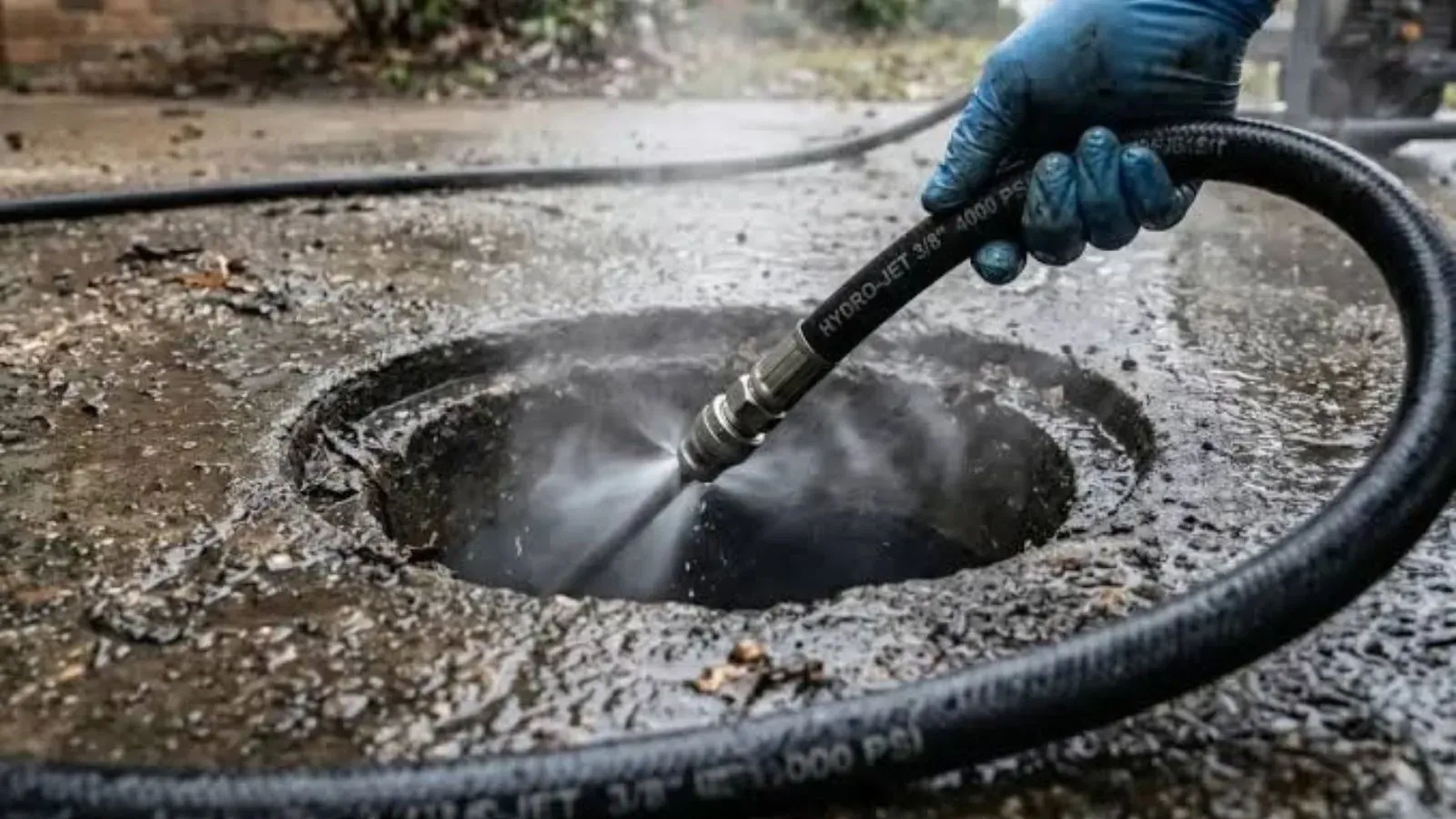
Hydro jetting in Erlanger, KY is a drain-clearing method that sends pressurized water through a hose with a special nozzle. The jets cut through buildup and wash it down the line instead of leaving it on the pipe wall.
It is not the right tool for every clog. Our plumbers decide between a cable, a jet or a repair after looking at the pipe, and they will tell you when jetting would do more harm than good.
The signs that point to a line needing more than a cable
Most people never ask for jetting by name. They call because the kitchen sink clears for a few days and then slows again, or because a tub and a toilet gurgle at the same time. Others notice a slow drain smell that comes back after every cleaning.
Those repeat problems usually mean the clog was only opened, not removed. A cable punches a hole through grease or roots, and the rest stays on the wall to rebuild. When that pattern shows up, a plumber is likely to bring up jetting as the next option.
Cable machine or water jet: picking the right tool
Neither tool is better in every case. The right one depends on what is in the pipe and what the pipe is made of.
A cable machine fits when
- A single soft clog sits near a fixture
- Hair, paper or a small object is the cause
- The pipe is old and fragile
- The line is small, such as a bathroom sink branch
- A quick fix is enough for a one-time blockage
A water jet fits when
- Grease coats the wall of a kitchen or main line
- Tree roots have grown into joints
- Scale or sediment narrows the pipe
- Cable work has failed or the clog returns
- A camera shows a sound pipe that is just dirty
A jet cleans the whole circle of the pipe. A cable only clears a path. That is why jetting tends to hold up longer, and why it costs more per visit.
What happens on a jetting visit
The process has a camera step on purpose. Skipping it is how a pipe gets damaged.
- 1
Camera run first
A small camera goes down the line to show the pipe material, the blockage and any cracks or offsets. This tells the plumber if the pipe can take pressure.
- 2
Open the access point
A cleanout, a pulled toilet or a roof vent gives the hose a way in. A cleanout cap that is stuck or buried adds time.
- 3
Run the hose and nozzle
The nozzle has jets that point backward, pulling the hose forward while the spray scours the wall. Pressure is set to fit the pipe size and material.
- 4
Work back out slowly
The plumber pulls the hose back in passes, cleaning every stretch twice. Debris flows ahead to the main sewer, so the line must be open downstream.
- 5
Second camera pass
A final look confirms the wall is clean and shows any damage that was hidden under buildup.
Same drain, third clog this year?
Call and describe the pattern. The plumber can tell you whether a camera and jetting make sense.
Sewage or water coming back up and a jet may be needed
When a drain backs up in several places at once, treat it as urgent. The 24/7 line takes these calls, and the plumber can tell you on the phone whether jetting is likely to be on the table.
Stop using water
Do not flush or run the washer until the line is open.
Find your cleanout
If you know where the cleanout cap is, clear the area around it so the plumber can reach it fast.
Keep people and pets away
Backed-up drain water can carry germs. Keep children out of any wet area.
Photograph the damage
A few pictures help an insurance claim later. Do not wade into standing water to get them.
What jetting does to each kind of blockage
The same jet behaves differently on different material, which is why the nozzle changes between jobs.
| Blockage type | What the jet does | Honest limit |
|---|---|---|
| Kitchen grease | Cuts and flushes the waxy layer | Heavy buildup may need repeat passes |
| Tree roots | Shreds fine roots inside the pipe | Roots grow back unless the joint is fixed |
| Scale and mineral buildup | Scours the wall back to bare metal | Brittle cast iron may not tolerate it |
| Silt and sludge | Pushes the load to the main sewer | Needs a clear path downstream |
| Collapsed or broken pipe | Not suitable, risk of damage | Camera shows this, repair comes first |
If the camera finds a break, jetting stops. Pressurized water forced into a cracked pipe can wash out soil around it. At that point sewer line repair is the real answer.
Old cast iron and clay need a careful hand
In the US generally, cast iron drains were common in older homes and clay pipe in older sewer laterals. Both can be sound, and both can be fragile. A camera or pipe inspection shows what this house actually has, and the plumber then picks a pressure that suits it.
Jetting and the homes built in Erlanger's growth decades
Erlanger added housing quickly in the 1950s, 1960s and 1970s, and many of those houses sit on lateral lines that have been in the ground for decades. Roots find joints in older pipe. If your home dates from that boom, ask for the camera step before any jetting, because the footage tells you whether the lateral is a cleaning job or a repair.
Under SD1's published policy, the private sewer lateral is the property owner's responsibility, including any inspection to confirm it is clear. That means the jetting bill and any repair after it are yours to decide, so ask to see the footage before approving a bigger job. Confirm current terms with SD1 if you are asking about help programs.
How the cost of jetting is set
Jetting is priced from the job, not a flat package. The price is stated before the machine comes off the truck.
Line length and size
A short branch costs less than a long run to the street. Larger pipe needs more hose and more water.
What is blocking it
Grease may need one pass. Dense roots or heavy scale may need several.
Access
A working cleanout saves time. Pulling a toilet or climbing to a roof vent adds labor.
Camera before and after
The inspection is a separate line item, and it is what makes the job safe.
Emergency timing
After-hours calls carry added staffing cost. Same-day appointments are available when the schedule allows.
Standard homeowners policies often exclude damage from ordinary line clogs and root intrusion, but sudden backup coverage may be an optional add-on. Check with your insurer before the visit, and keep the camera footage for your records.
Describe the symptom to the dispatcher and ask whether jetting or a cable fits.
Call (859) 900-9164Hydro Jetting Questions From Erlanger Homeowners
Yes. The 24/7 emergency line takes jetting and drain calls at night, on weekends and on holidays. If the line is badly blocked and the plumber needs a camera first, they will say so on the call.
It depends on the pipe. Sound cast iron and clay can handle controlled pressure, while cracked, collapsed or heavily corroded pipe cannot. That is why a camera run comes first.
It tends to last longer on grease and scale because it cleans the whole pipe wall. Roots can grow back, so a root-prone line may need periodic jetting or a repair at the joint.
Consumer units are weak, and professional pressure can hurt a person or a pipe if misused. The camera step is also hard to do without the right equipment. For most homeowners it is a poor trade.
No. A collapse is a repair job. If footage shows a break, the plumber will explain whether the fix is a spot repair, lining or a dig.
Yes, particularly where grease has coated the branch. A kitchen line that clogs every few weeks is a good candidate, once the camera shows the pipe is in good shape.