
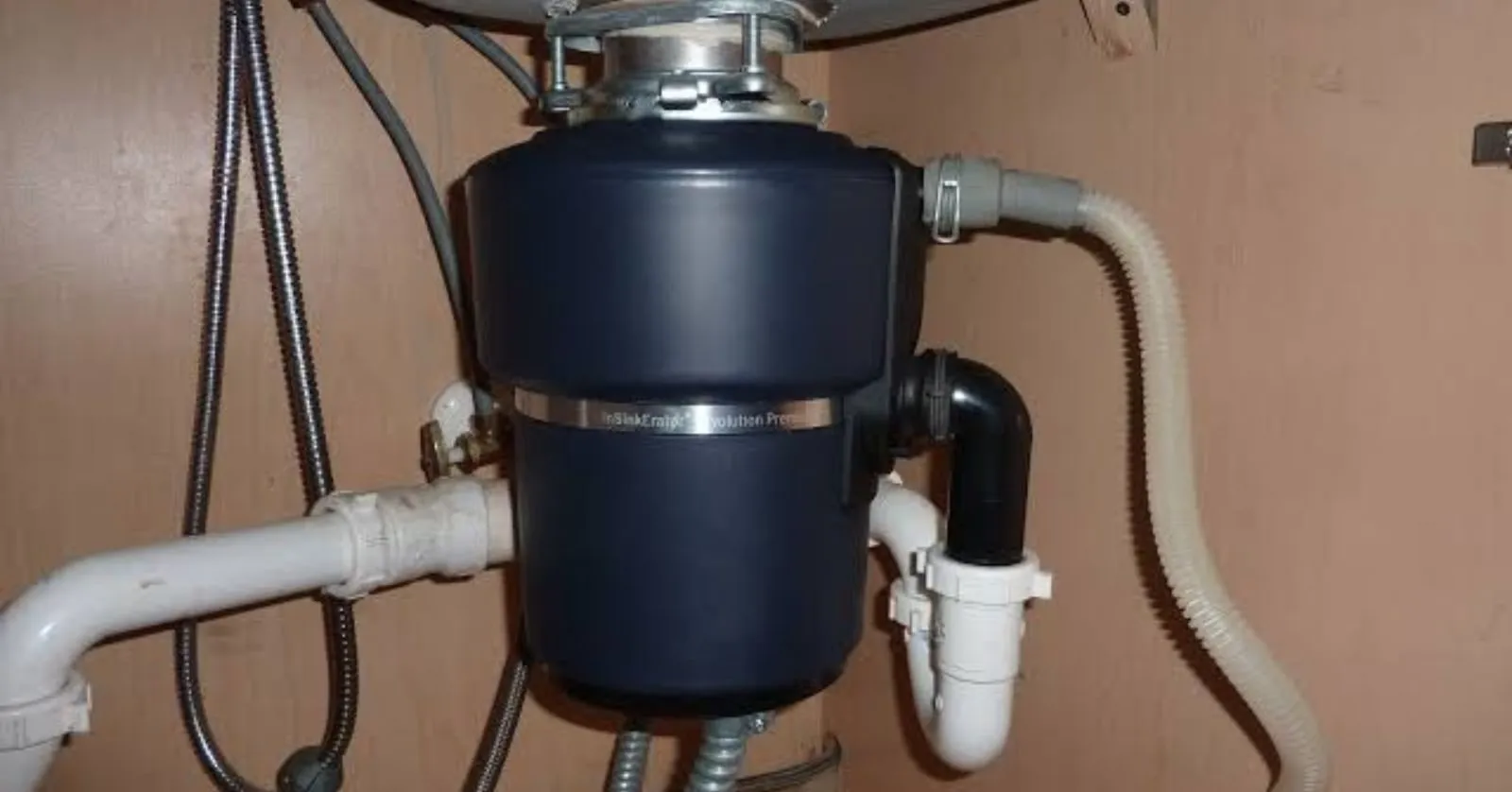
A disposal that jams with a full sink of dishes, or leaks into the cabinet below, turns a kitchen unusable fast. Garbage disposal repair in Erlanger, KY is available through the 24/7 line, so a plumber can look at it tonight if it cannot wait. Switch the unit off at the wall switch first and keep your hand out of the drain.
Most disposals fail in one of three ways: the shredder plate jams, the motor overheats and trips its reset, or a seal lets water escape. Each has a different fix, and sometimes the fix is a new unit.
Freeing a jammed disposal without putting a hand in it
A jam is the most common call and often the easiest to clear. These steps keep your hands out of the grinder and are the same ones the plumber follows.
- 1
Cut the power
Turn off the wall switch, then unplug the unit under the sink or flip the breaker. Never trust the switch alone while a tool is in the drain.
- 2
Look for stuck objects with a flashlight
Use tongs or pliers to lift out a bottle cap, a fruit pit or a utensil. Keep fingers well clear of the opening.
- 3
Turn the flywheel with a hex key
Most units have a socket in the center of the underside. Work an Allen wrench back and forth until the plate turns freely.
- 4
Press the red reset button
It sits on the bottom of the unit. A motor that overheated needs a few minutes to cool before the button will stay in.
- 5
Restore power and run cold water
Switch it on briefly with water running. If it hums again without spinning, stop and call, because the motor or the bearings may be damaged.
Sounds and signs, and what each one means
The way a disposal fails usually tells you which part to look at. This table is a starting point, not a diagnosis.
| What it does | Likely problem | Next step |
|---|---|---|
| Hums but the plate will not turn | Jam or seized flywheel | Hex key, then reset, then call |
| Completely silent, no hum | Tripped reset, bad switch or dead motor | Reset, check breaker, then call |
| Grinds loudly with a metal sound | Foreign object or loose parts | Switch off, remove object |
| Water drips under the unit | Failed seal, cracked housing or loose flange | Tighten fittings or replace unit |
| Water pooling at the sink flange | Dried putty or loose mounting ring | Reseat the flange |
| Drains slowly after grinding | Partial clog in the trap or branch line | Clear the drain line |
Several of these overlap. A humming unit with a drip under it, for instance, is usually near the end of its life.
Water in the cabinet or backing up the sink
Dirty water coming up beside the disposal is a drainage problem and not only a disposal problem. Stop using the sink and the dishwasher, because the dishwasher drains through the disposal.
Switch the unit off
Use the wall switch and keep the breaker off if water is near the plug or outlet.
Empty the cabinet and dry it
Move chemicals and food out, then put a bowl or towels under the leak to track where it is coming from.
Shut the supply stops if a line is leaking
Close the hot and cold stops under the sink only if the leak is from the faucet lines. A leaking disposal itself has no valve of its own.
Hold the dishwasher
Do not run it until the sink drains. Waste water can flow back into the dishwasher and contaminate it.
Kitchen sink flooding or leaking below?
Switch the disposal off and stop using the sink, then call. The line is open all night.
Three places a disposal can leak, and how to tell them apart
Dry the unit with a towel, run water for a minute and trace the drip with a dry paper towel. The location of the first drop says which seal has failed.
A leak at the top means the sink flange and its putty or gasket have loosened. A leak at the side points to the dishwasher inlet or the drain elbow gasket. A leak from the bottom, or around the reset button, means the housing has cracked and the disposal needs replacing.
Why the top and side are repairable
Gaskets, clamps and plumber's putty are inexpensive parts. A plumber can reseat the flange and replace the gasket in one visit, if the housing itself is sound.
Why a bottom leak is the end
Disposal housings are not made to be patched. Once water reaches the motor windings, corrosion follows, and the repair costs more than the unit is worth.
Repair the disposal or put in a new one
Disposals are not built to last forever, and the plumber will tell you honestly which side your unit is on.
Repair is reasonable when
- A jam, reset or loose flange is the only issue
- The unit is quiet when it runs
- There are no cracks or rust at the base
- It grinds well after the fix
Replacement is reasonable when
- The housing leaks from underneath
- The motor hums and trips after every fix
- The unit is loud, slow and old
- Parts cost near the price of a new unit
A new unit also means a new mount, new gaskets and a fresh drain connection. Installing the replacement is usually done in the same visit.
What should stay out of the disposal
Most repair calls come from a short list of habits. Changing them extends the life of the next unit.
Grease and fat
It cools and coats the pipe, which creates a clog past the disposal that the grinder cannot touch.
Coffee grounds and eggshell fragments
They pack into a paste downstream, and clog the trap a few feet from the unit.
Stringy or starchy food
Celery, corn husks, pasta and rice wrap around the plate or swell in the pipe.
Bones and fruit pits
These jam the plate and can bend the shredder, causing the hum that brings the call.
Non-food items
Bottle caps, cutlery and twist ties are the usual causes of a metal grinding sound.
When the slow sink is a drain problem, not a disposal problem
A disposal can run normally and still drain slowly. If the water stands in the sink after grinding, or the dishwasher fills the sink when it empties, the blockage is in the trap or the kitchen branch line. Cabling the kitchen line clears it, and the disposal does not have to come out.
If you are on a septic system, be careful with how much food you send down any disposal. Ask whoever services the tank how a disposal affects it before you decide on a replacement.
What goes into the price of a disposal repair
A reset and a hex key can fix a jam in minutes, while a leaking housing means a new unit. The plumber diagnoses first and gives a clear price before starting the work.
Repair or replacement
Gasket and flange repairs cost less than a new unit, which adds the disposal and a new mount.
Size and power of the unit
Larger motors handle more food but cost more and may need a different mounting ring.
Electrical connection
Some units are hardwired and some plug in, and changing between the two adds work.
Drain condition downstream
A grease clog beyond the trap is a separate drain job that adds time.
Time of the call
An after-hours dispatch is priced differently from a scheduled visit.
Wear and tear on a disposal is not usually an insured loss. Water damage from a sudden leak under the sink may be, depending on your policy. Keep notes, take your own photos and ask your insurer before you decide.
Describe the sound, the leak or the backup and get a clear price first.
Call (859) 900-9164Garbage Disposal Repair Questions From Erlanger Homeowners
The motor is getting power but the plate is stuck. Switch it off, free the flywheel with a hex key in the bottom socket, then press the reset button.
If it hums again, the motor or bearings may be failing.
No. Turn off the switch and unplug the unit or kill the breaker, then use tongs or pliers. A unit that restarts while a hand is in the drain causes serious injuries.
A plumber is a safer call than a risky guess.
Yes. The 24/7 line takes calls any hour, and same-day appointments are offered when available. A disposal leaking into a cabinet, or a sink backing up and flooding the counter, is handled as an emergency.
Turn the unit off and stop using the sink and dishwasher while you wait.
Food film sticks to the underside of the splash guard and the grinding chamber. Scrub the guard, run ice and citrus peels with cold water, and flush the line.
If the odor persists, the trap or the branch line may hold buildup that needs cleaning.
It depends on the unit and the use. A disposal that jams, leaks or hums constantly is usually in the last stretch of its life, whatever the age on the label.
A plumber can tell you whether another repair is reasonable.
Yes. The dishwasher hose connects to a side inlet on the disposal. A blocked disposal or a plug in the inlet knockout sends dishwasher water into the sink or onto the floor.
If the sink fills during a dishwasher cycle, mention it when you call.