
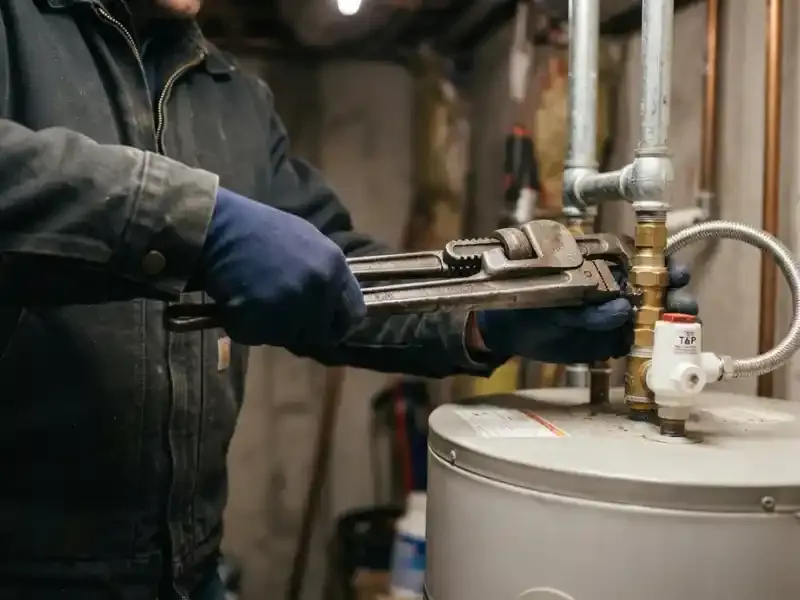
A water heater that is leaking or has gone cold is an emergency in a house, and the 24/7 emergency line is open for exactly that. If water is pooling, shut the cold supply valve on top of the tank and keep everyone away from wet outlets until a plumber arrives.
Water heater repair in Erlanger, KY covers the parts that wear out on a tank unit: heating elements, thermostats, gas valves, thermocouples, anode rods, the temperature and pressure relief valve and the drain valve. Some of these are quick fixes. A tank that leaks from its own shell is not one of them, and we will say so plainly.
Five Ways a Failing Tank Shows Itself
Most people notice the symptom long before they know the cause. These are the patterns we see most often, roughly in order of how urgent they are.
Water around the base
Puddles under a tank can come from a loose fitting, a dripping relief valve or a rusted-through shell. Where the water enters the puddle tells the plumber which one it is.
Hot water runs out fast
Showers that turn lukewarm after a few minutes often point to a failed lower heating element or a thick layer of sediment on the tank floor.
No hot water at all
On an electric unit this is usually a tripped high-limit reset, a dead thermostat or both elements burned out. On a gas unit, look at whether the pilot or burner is lit.
Rumbling or popping from the tank
Water trapped under hardened sediment boils and bubbles as it heats. The noise is a warning that the tank is working harder than it should.
Rust-colored hot water
If only the hot side runs brown, the inside of the tank or a depleted anode rod is the likely source. Cold water running brown points elsewhere.
While You Wait for the Plumber
Nights and weekends are when tanks tend to give out, because that is when a house uses the most hot water. These steps limit the damage until someone can look at the unit.
Close the cold supply
The shutoff valve sits on the pipe feeding the top of the tank. Turn the handle until it stops. If it will not turn, close the main valve for the house instead.
Cut the power or fuel
Switch off the dedicated breaker for an electric unit. For gas, turn the control knob to off only if you can do it without standing in water.
Smell gas? Leave first
If you smell gas, get everyone out of the building and call the gas utility from your gas bill or 911 from outside. Do not call a plumber until you are outside and safe.
Keep drains in mind
Water from the relief valve discharge pipe or a floor drain is normal for a moment. A steady flow from the tank shell is not.
Electric Versus Gas: What Usually Fails
The fuel type changes the checklist. This table shows the first parts a plumber tests and what each failure looks like from the homeowner side.
| Symptom | Electric tank | Gas tank |
|---|---|---|
| Completely cold water | Tripped breaker, high-limit reset, dead thermostat | Pilot out, bad thermocouple, gas valve fault |
| Lukewarm only | Lower element failed, upper still works | Dirty burner, sediment layer, low flame |
| Short hot supply | Failed element or broken dip tube | Sediment buildup or broken dip tube |
| Scorched or sooty smell | Rare, usually wiring or element dry-fire | Venting problem, needs a stop and a closer look |
| Pilot keeps going out | Not applicable | Worn thermocouple, drafts or a weak gas valve |
| Tripping the breaker | Shorted element or wiring fault | Not applicable |
Several of these rows overlap on purpose. A cold tank with a good element, for example, can still be a thermostat issue, which is why testing beats guessing.
How a Plumber Tests Before Replacing Parts
A parts swap with no testing is how people end up paying twice. The order below is how a careful repair call usually runs.
- 1
Confirm power or fuel
Breaker, disconnect switch and shutoff valve come first. A surprising number of cold tanks are a tripped reset button.
- 2
Test with a meter
On an electric unit the plumber checks voltage at the terminals, then resistance on each element. A reading that does not match tells you which part is dead.
- 3
Inspect the burner and flue
On gas, the burner assembly, the thermocouple and the draft hood get checked. Soot, rust flakes or a loose vent pipe stop the job until corrected.
- 4
Check the relief valve and pressure
A gauge on a hose bib shows whether supply pressure is too high. High pressure shortens the life of every part in the tank.
- 5
Decide repair or replace
The plumber explains the options and the price for each before any work begins, so you choose with the numbers in front of you.
Water Heater Down Right Now?
Call the 24/7 line, describe what the tank is doing and get a plain answer on repair versus replacement.
The Relief Valve That Should Never Be Ignored
The temperature and pressure relief valve is a brass safety device near the top of the tank with a discharge pipe running down toward the floor. If the tank overheats or pressure climbs too high, the valve opens to release it. A valve that drips now and then often means thermal expansion in a closed system, not a bad valve.
Do not cap, plug or tighten down a dripping relief valve. That removes the one thing standing between a hot tank and a failure. Replacing the valve is a routine repair, but a plumber should also check why it was opening, because an expansion tank or a pressure reducing valve may be missing or worn.
When Fixing It Makes Sense
The Department of Energy says storage tank units typically last 10 to 15 years. Age matters, but so does where the failure is.
Repair is usually reasonable
- Tank is under about ten years old
- Failed element, thermostat or thermocouple
- Relief valve or drain valve dripping
- No water coming from the tank shell
- Anode rod still has material left
Replacement is usually smarter
- Water seeping from the tank body or seams
- Tank is well into its second decade
- Repeated repairs within a short time
- Heavy rust flakes in the drain water
- Sediment so thick the tank cannot heat evenly
Leaking from the tank body cannot be patched. If that is what we find, we will explain the replacement path and why a repair would not hold.
Flushing and Anode Rods Before a Failure
Sediment is the quiet cause behind many repair calls. Minerals in the water settle on the tank floor, insulate the water from the burner or lower element and shorten the life of the tank. Draining a few gallons through the drain valve once a year helps, and a full flush clears more. If the drain valve is stuck or plastic and brittle, stop and let a plumber open it.
The anode rod is a sacrificial metal rod that corrodes so the steel tank does not. Once it is used up, the tank itself starts to rust. Checking it every few years costs little compared with a tank replacement, and it is one of the few ways to push a healthy tank toward the long end of its lifespan.
Heater Repair Around Erlanger and Elsmere
Erlanger grew fast in the 1950s, 1960s and 1970s, and many homes from those decades still run original or early replacement water heaters in basements, closets and utility rooms. Homes from that period often have older supply piping and shutoffs that have not been turned in years. A camera or inspection shows what a given house actually has, and it is worth testing the shutoff before you need it.
The company is based on Dixie Highway in Erlanger and covers nearby towns. If your tank is in an Elsmere house or anywhere else near us, the same-day appointments approach applies when schedules allow, and the emergency line handles after-hours leaks.
What Drives a Water Heater Repair Price
Repair prices vary because the failures vary. A reset-button problem and a burned-out gas valve are not the same job, so the price is set after diagnosis and before work begins.
Which part failed
Elements and thermostats are inexpensive parts. Gas control valves and some relief assemblies cost more.
Fuel type and tank size
Gas units need venting checks and gas-side parts. Larger tanks take more time to drain and refill.
Access to the unit
A tank in an open utility room is a quick job. One wedged in a tight closet or under stairs takes longer.
Condition of valves and fittings
Seized shutoffs, corroded unions or a stuck drain valve add labor before the repair can start.
Time of the call
After-hours and weekend dispatch can carry a different service charge, and you hear the number before we start.
Homeowners policies often treat a sudden leak differently from long-term seepage or a worn-out tank. Whether yours covers the water damage depends on the policy, so take photos of the area and call your carrier. We can describe what we found, but the coverage decision is theirs.
Tell the dispatcher what the tank is doing and get a clear price before anyone starts work.
Call (859) 900-9164Water Heater Repair Questions From Erlanger Homeowners
It may be a loose inlet or outlet connection, a dripping relief valve or a leaking drain valve, all of which are repairable. If the water seeps from the tank body itself, the steel has failed and the tank needs replacing.
Dry the area, then watch where the next drops form. That detail helps the plumber diagnose faster.
A lit pilot with no hot water often points to a gas control valve, a clogged burner or a thermocouple that is not holding the valve open. Each takes a different fix.
If you smell gas at any point, leave the building and call the gas utility from your gas bill or 911 from outside.
Many electric units have a red reset button behind the upper access panel. Turn off the breaker first, because the panel exposes live wiring. If the button trips again after a reset, something is shorted and it should be diagnosed, not reset repeatedly.
Usually the rumble is sediment, not an explosion risk. It still means the tank is overworking, and the relief valve should be checked at the same visit. If you also see leaking, steam or a hot smell, shut down the unit and call.
The U.S. Department of Energy says storage tank units typically last 10 to 15 years. Water conditions and maintenance move that number, so test your tap and ask Northern Kentucky Water District for its annual water quality report if you want to know what the tank sees.
Yes. The emergency line is open 24/7, and the dispatcher will ask whether water is leaking, whether the unit is gas or electric and whether you can reach the shutoff valve. We offer same-day appointments when available and will not promise an arrival time we cannot keep.
Under 815 KAR 20:050, repairing leaks, cocks or valves does not need a plumbing permit, but installing or replacing a water heater does. If the repair turns into a replacement, a licensed plumber handles the permit.