
If water is spreading, shut off the main valve first, then call the 24/7 line. Switch off power to any wet area from the breaker panel and stay clear of standing water near outlets. A running leak does damage by the hour.
Emergency leak detection in Erlanger, KY means finding the exact source of a leak you cannot see: under a slab, inside a wall, above a ceiling or in the buried line from the meter. The goal is a small, accurate repair instead of a large, guessed one.
While the plumber is on the way
Less water on the floor buys you time and keeps the damage list short. These steps are safe for most homeowners and take a few minutes.
Close the main shutoff
It is usually where the line enters the house, often near the water heater or in the basement. Turn it clockwise until it stops.
Cut power near wet areas
If water is near outlets, a ceiling light or an appliance, flip the breaker off. Do not step into standing water to reach the panel.
Move what you can
Lift rugs, electronics and boxes off wet floors. Put a bucket under any dripping ceiling, and keep people out from under a ceiling that is bulging.
Note what you know
Write down where you saw water, when the bill jumped and whether the meter spins with everything off. That saves search time.
The meter test that tells you if you have a leak at all
Before any equipment comes out, this simple test separates a hidden leak from a high bill with another cause. It takes about twenty minutes and needs no tools beyond a flashlight.
- 1
Stop all water use
Turn off faucets, the ice maker and irrigation. Make sure no one flushes a toilet. The washer and dishwasher must be idle.
- 2
Find and open the meter box
It usually sits near the street or property line under a lid. Lift it carefully, and watch for insects. Check your water bill or ask NKWD if you are unsure who supplies your address.
- 3
Read the low-flow dial
Most meters have a small triangle or wheel that spins at the slightest flow. If it turns with everything off, water is leaking somewhere past the meter.
- 4
Close the house main and recheck
If the dial stops, the leak is inside the house. If it keeps turning, the leak is in the buried service line between meter and house.
- 5
Check the toilets
Put a few drops of food coloring in each tank. If color shows in the bowl within fifteen minutes without flushing, the flapper leaks. That is a cheap fix, not a hidden pipe.
Leaks under a concrete slab
A slab leak means a pressurized supply line under the concrete is dripping or spraying. Common clues are a warm patch on the floor, the sound of running water when everything is off, wet carpet at a wall or a bill that climbs for no reason. A hot water line leak under a slab can make a floor feel warm.
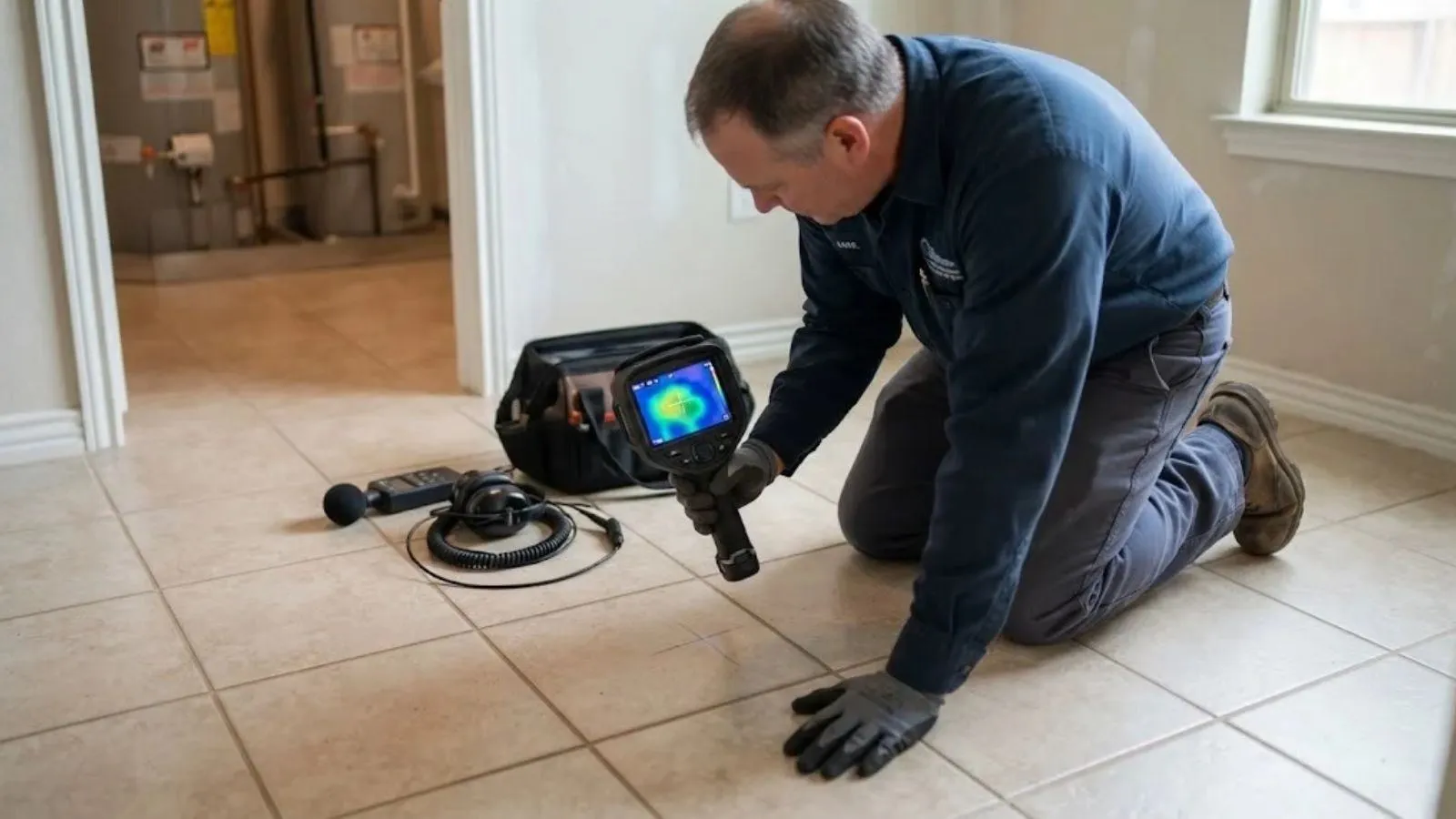
The search starts with acoustic listening, where a sensitive microphone is run along the floor to hear where the pipe sound is loudest. Thermal imaging helps with hot lines. Isolating each supply line with pressure tests tells the plumber which branch is losing water before a single cut is made.
What repair choices look like
Once the spot is marked, the options are to break the concrete and patch the pipe, to reroute the line through walls or attic, or to replace the affected line. Rerouting costs more up front but avoids repeat breaks in the same slab. This page does not assume your house has a slab, and the plumber will confirm the foundation type on arrival.
A leak in the line between the meter and the house
The water service line carries water from the meter or the main to your house, and the pipe belongs to the property owner past the meter. If the meter keeps spinning with the house main closed, this line is the prime suspect. Signs include a soft spot in the yard, a lush stripe of grass, low pressure or water around the meter box.
The plumber listens along the line with ground microphones and, on plastic pipe that does not carry sound well, using tracer gas or an inserted signal. Once the leak is marked, the usual choices are a spot repair or a new line, and the plumber will explain the trade-offs. Check with 811 before any digging. A new or replaced water service needs a permit under Kentucky's 815 KAR 20:050, which a licensed master plumber can pull.
A hidden leak does not wait for business hours
Close the main, then call. The plumber starts with the meter and works toward the exact pipe, with a clear price first.
Which tool finds which kind of leak
No single device finds every leak. The plumber picks tools by symptom and pipe type.
| Method | Best for | Limit |
|---|---|---|
| Meter and pressure test | Deciding where to look | Does not pinpoint |
| Acoustic listening | Metal supply lines under floors | Weak on plastic |
| Thermal imaging | Hot lines, wet walls | Needs a temperature gap |
| Tracer gas | Plastic and mixed lines | Needs a sealed section |
| Moisture meter | Walls, ceilings, subfloors | Shows wet, not source |
| Camera inspection | Drains and sewer lines | Supply lines are sealed |
Most jobs combine two or three of these. A moisture reading plus a pressure test is common for a wet wall.
Where hidden water shows up and what it means
Water travels along framing and pipe, so the stain is often not above the leak. These patterns guide where to start.
Ceiling stain or sag
Often a supply or drain line above, a leaking tub or an upstairs fixture. A moisture scan traces it back along the joists.
Bubbling paint or damp drywall
A pinhole in a wall pipe or a loose shower valve. The wall may need only a small access cut once located.
Musty smell, damp crawlspace
A sagging or dripping line under the floor. If your house has a crawlspace, the plumber checks it by hand and by moisture meter.
Wet lawn with a dry spell
A buried service line or an irrigation line. An irrigation zone leak can be isolated by closing valves one at a time.
Pool or spa losing water
Pool plumbing leaks are tested by isolating suction and return lines. Not every pool problem is plumbing, and the plumber says so.
Water in the garage corner
Often a supply line at a wall or the water heater area. It can also be runoff, so a dry-weather check helps.
Commercial and multi-unit leak searches
A leak in a shop, office or four-unit building has more places to hide and more people affected. Hard-to-find sources include fire lines, irrigation, shared risers and slab lines under tenant spaces. The plumber works from the building's isolation valves, closing sections in turn while watching the meter.
Plan for access. Give the plumber the shutoff locations, a contact who can reach tenants and the hours the space is quiet. After-hours work is available when a leak must be located before a business opens. Owners dealing with floor drains or backflow assemblies can also look at commercial plumbing service.
Finding the leak versus fixing it
Detection and repair are two jobs, and they are priced as such. A clear price comes before either one starts.
Detection gives you
- The exact location, marked on the surface
- Which pipe or line is leaking
- A plain list of repair options
- Less cutting and less digging
- Evidence for an insurance claim
Detection does not include
- Drywall, flooring or concrete patching
- Drying and mold remediation
- Cabinet or carpet replacement
- Landscape restoration after a dig
- Water damage cleanup
Restoration is a separate trade. We tell you what the repair opens up, so you can plan for a contractor if needed.
Reading your water bill in NKWD territory
Northern Kentucky Water District serves retail customers in Kenton, Boone and Campbell counties. Check your water bill to confirm who supplies your address. If the bill creeps up with no change in habits, compare the last few months, then run the meter test above.
EPA WaterSense says household leaks can waste nearly 10,000 gallons a year and that about 10 percent of homes leak 90 gallons or more per day. A bill that has climbed quietly is often the first sign. If NKWD or you confirm unusual use, call us and we will work from the meter to the fixture.
Much of Erlanger's housing was built during the boom decades of the 1950s through 1970s, and the core is older still. Older supply lines can be galvanized steel or copper, and a pinhole may appear at a joint. What your own house has depends on its history, and leak location tells us more than year built.
What goes into the price of a leak search
The price depends on how hidden the leak is and how many tools the search needs. You hear a clear price before work starts, and if the search grows, we call before adding to it.
Size and type of building
A two-bedroom house is quicker to isolate than a four-unit building or a shop with multiple risers.
Pipe material
Metal carries sound well. Plastic often needs tracer gas, which adds steps and time.
Number of suspected zones
A single stain is one search. A bill spike with no visible water means the whole system is tested.
Access and cutting
Open crawlspaces and basements are fast. Finished walls, tile and slabs need more care.
After-hours work
Nights and weekends may carry a different rate. The price is shared before we start.
Many homeowners policies cover sudden, accidental water damage but exclude gradual leaks and the pipe itself. Some cover the cost of tearing out to reach a leak. Ask your agent before work begins, and keep photos and our written findings for your claim.
Call the 24/7 line and tell us what you are seeing.
Call (859) 900-9164Leak Detection Questions From Erlanger Homeowners
Yes. The line is open around the clock, and same-day appointments are available when the schedule allows. While you wait, close the main shutoff and switch off breakers near wet areas.
Stop all water use, then watch the low-flow dial at the meter. If it moves with everything off, water is escaping. Closing the house main and checking again tells you whether the leak is inside or in the buried line.
Usually. Moisture meters, thermal imaging and acoustic tools narrow the search to a small area, so the cut is limited to the size needed for access.
The plumber isolates supply lines with pressure tests, then listens along the floor with a microphone to mark the leak. The repair is a separate decision, with several options.
Yes, though plastic does not carry sound well. Tracer gas or a signal sent through the line is used, and the exact method depends on the pipe and its length.
Then it is in the service line or an irrigation line. The meter test narrows it down, and ground microphones or tracer gas finds the spot. Call 811 before anyone digs.
Yes. Commercial searches work from isolation valves and meters in sections. Access and tenant contact make the visit smoother, so have those ready when you call.
Ask when you call. We explain how detection and repair are priced before either job starts, so there are no surprises.