
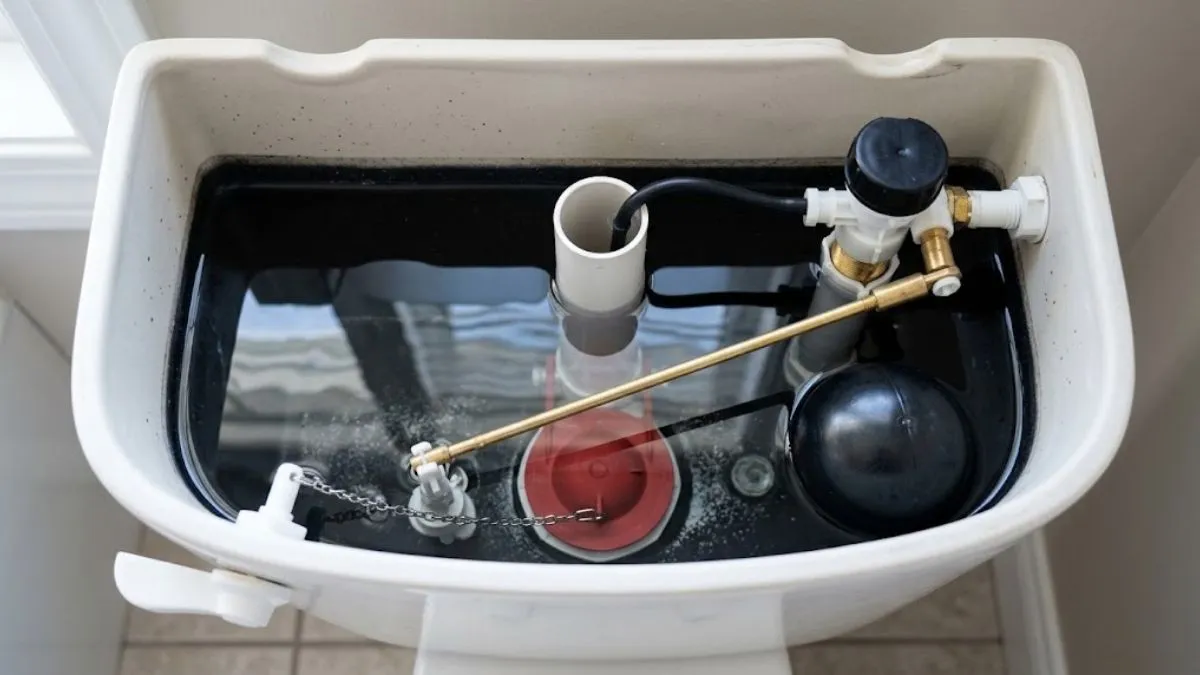
If your toilet is overflowing right now, close the shutoff valve behind it and call the 24/7 line. Emergency toilet repair in Erlanger, KY covers the jobs that cannot wait for a weekday slot: a bowl that keeps rising, a tank that will not stop filling, or water spreading from the base across the bathroom floor.
Most toilet failures trace back to a short list of parts. A flapper stops sealing, a fill valve never shuts off, a wax ring loses its grip on the flange, or the trap fills with something it was never meant to carry. The plumber works out which one it is before anything gets pulled apart.
Bowl rising? Four things to do before the plumber gets there
Water that is still climbing will not stop by itself, so stop the supply first. Then keep people and pets out of the room until the floor is dry, because wet tile and a floor outlet or space heater are a bad mix.
Shut the valve behind the bowl
Turn the small oval handle near the floor clockwise until it stops. If it will not turn, lift the tank lid and press the flapper down or lift the float arm to stop the refill.
Do not flush again
A second flush into a blocked trap sends more water over the rim. Leave the handle alone until the cause is known.
Cut power near the water
If water is reaching an outlet, a fan or a heater, switch off that circuit at the panel, but only if the floor around the panel is dry.
Soak it up and describe the water
Lay towels along the base to slow the spread. Tell the dispatcher whether the water is clear or dirty, since dirty water points toward a blockage further down the line.
Six ways a toilet complains before it fails
Toilets rarely fail without warning. The signs below usually show up days or weeks ahead, and each one points at a specific part.
The phantom flush
The tank refills for a few seconds with nobody near it. The flapper is leaking into the bowl and the fill valve keeps topping up the loss.
A hiss after every flush
The fill valve is slow to close or the float is set too high. Water may be trickling down the overflow tube all night and into the sewer.
A flush that swirls but does not clear
Blocked rim jets, a low tank water level or a partial clog in the trap can each cause it. A bowl that drains slowly after a flush is the early version of a full clog.
Rocking on the floor
A toilet that shifts when someone sits has loose closet bolts or a damaged flange. Every shift breaks the wax seal a little more.
Sweat that looks like a leak
A cold tank in a humid bathroom drips condensation onto the floor. Dry the tank, then watch whether the puddle comes back before blaming the seal.
A soft spot near the base
Slow seepage rots the subfloor long before a puddle forms. A dark ring or a spongy board next to the toilet is a reason to call soon.
Parts, symptoms and the repair that follows
The pairings below cover most calls. They are the usual suspects, not a diagnosis, because two faults often sit together in the same toilet.
| What you see | Usual cause | What the repair involves |
|---|---|---|
| Tank refills on its own | Worn flapper or tight chain | New flapper, reset chain slack |
| Constant hiss, water never stops | Failed fill valve | Swap fill valve, set water level |
| Water at the base after a flush | Failed wax ring or loose bolts | Lift toilet, new ring, check flange |
| Drip at the wall or floor valve | Worn stop valve or cracked supply line | Replace valve or braided line |
| Handle spins with no flush | Broken lever arm or chain link | Replace handle and chain |
| Bowl clears slowly | Partial clog or blocked rim jets | Auger the trap, clear the jets |
A plumber confirms the fault by watching the tank and bowl through a flush, and the repair price is set once that is known.
Water on the bathroom floor right now?
Shut the valve behind the toilet, then call the line. The dispatcher asks what the water looks like and sends a licensed plumber.
Leaks at the base: the wax ring, the flange and the floor beneath
A wax ring is a soft seal between the toilet horn and the drain flange. It fails when the toilet rocks, when it has been lifted before, or when new flooring left the flange sitting lower than it should. Water from a failed ring seeps out slowly after each flush and soaks the subfloor.
Replacing the ring means shutting off the supply, draining the tank, unbolting the toilet and setting it aside. The plumber looks at the flange and the floor before setting everything back, because a new ring on a bad flange will leak again.
When the flange is the real problem
A flange that is cracked, corroded or below the finished floor will not hold a new ring. Repair rings, spacers or a new flange section may be needed, and the plumber tells you that before the job grows.
What happens when the bowl will not clear
A stubborn clog is cleared in a set order, from the least invasive tool to the most. The order protects the porcelain and the floor.
- 1
Read the water level
How fast the bowl drains after a plunge tells the plumber whether the block is in the trap or further down.
- 2
Plunge, then auger
A flange-style plunger comes first. A closet auger has a shielded tip that reaches into the trap without scratching the bowl.
- 3
Test the other fixtures
If the tub gurgles or a floor drain bubbles when the toilet is flushed, the block is past the toilet. That calls for clearing the branch line and not more work on the bowl.
- 4
Lift the toilet if it must come up
Some objects will not move through an auger. Pulling the toilet gives direct access to the trap and the drain below it.
- 5
Reset and run it
A new wax ring goes in, the bolts are snugged evenly and the toilet is flushed several times while the base is checked for seepage.
Keep the old toilet or put in a new one
Most toilets are worth repairing. Some are not, and the plumber will say so when the numbers favor a new fixture.
Repair makes sense when
- The porcelain is sound with no cracks
- The parts failing are a flapper, valve or ring
- The flush has always worked well
- Only one fault is showing
Replacement makes sense when
- The bowl or tank has a hairline crack
- The toilet clogs repeatedly with normal use
- The tank bolts and fittings are badly corroded
- You are redoing the bathroom anyway
If you choose a new toilet, setting a new fixture includes a fresh wax ring, a new supply line and a look at the flange.
Older Erlanger houses and what sits behind the toilet
Erlanger led the Cincinnati metro area in new construction for three years in the 1960s, after Interstate 75 opened the area to subdivisions. Homes from that boom were commonly plumbed with cast iron drains in the earlier years and plastic later, though a pipe inspection shows what a particular house actually has. That matters at the toilet because the flange has to seal to whatever material is below it.
The older core, platted in 1887 as the Erlanger Proper Subdivision, has houses that may have been repaired in stages over many decades. If the toilet in one of them has been lifted several times, ask the plumber to check the flange and the floor around it, not only the wax ring. Nights and weekends do not change that check.
What sets the price of a toilet repair
Toilet jobs range from a ten minute part swap to a floor repair, so the price depends on what the plumber finds. A clear price is given before work starts, and it covers the actual fault and not a guess.
Which part has failed
A flapper or fill valve is a short visit. A wax ring needs the toilet lifted, and a flange repair adds parts and time.
Whether the toilet has to come up
Clogs that the auger clears cost less than clogs that need the bowl removed to reach the trap.
Condition of the floor and flange
Soft subfloor or a corroded flange turns a seal replacement into a repair job with extra materials.
Repair or new fixture
A new toilet adds the fixture itself and a supply line, and both are priced up front.
Time of the call
After-hours dispatch costs differently from a scheduled weekday visit, and the difference is stated before the plumber starts.
Sudden overflow damage and slow seepage over months are often treated differently by homeowners policies. Ask your insurer before you decide, keep the failed part if you can and take photos of the area yourself. The plumber can write down what failed and what was done.
Describe what the toilet is doing and get a clear price before anyone starts.
Call (859) 900-9164Toilet Repair Questions From Erlanger Homeowners
Almost always the flapper is not sealing or the fill valve is not shutting off. Lift the tank lid and look: if water trickles into the bowl, it is the flapper, and if water pours down the overflow tube, it is the valve or float setting.
Both are quick repairs, and leaving them for weeks wastes water you pay for.
For a day or two, usually yes, if you wipe the floor and watch it. For longer, no. A leak at the base soaks the subfloor, and the damage costs far more than the seal.
If the toilet rocks, stop using it and shut the valve until it is fixed.
Yes. The 24/7 line is answered around the clock, and same-day appointments are offered when available. An overflowing bowl or a supply line spraying water is dispatched as an emergency.
While you wait, shut the valve behind the toilet and keep the room clear. No arrival time is promised on the phone, but the dispatcher tells you honestly what to expect.
Many homeowners do. Shut the supply, flush to drain the tank, and match the new part to the old one. The risk is a mismatched flapper that leaks as badly as the old one.
Call a plumber if the shutoff valve will not close, the tank bolts are seized or water appears at the base.
Flush a different toilet or run a sink. If only one fixture is slow, the block is local. If several fixtures gurgle, back up or drain slowly together, the blockage is in the main drain.
That second case calls for cleaning the main sewer line, and the toilet itself is not the problem.
No. Chemicals sit in the bowl and can splash on the person with the plunger or auger. They also weaken old fittings and make the job hazardous for the plumber who follows.
Use a flange plunger, and call if that does not work.
Check the tank water level, the flapper chain and the rim jets. A low tank, a chain with too much slack or mineral buildup in the jets all weaken the flush.
If those look right, the trap may be partly blocked and a closet auger will find it.