
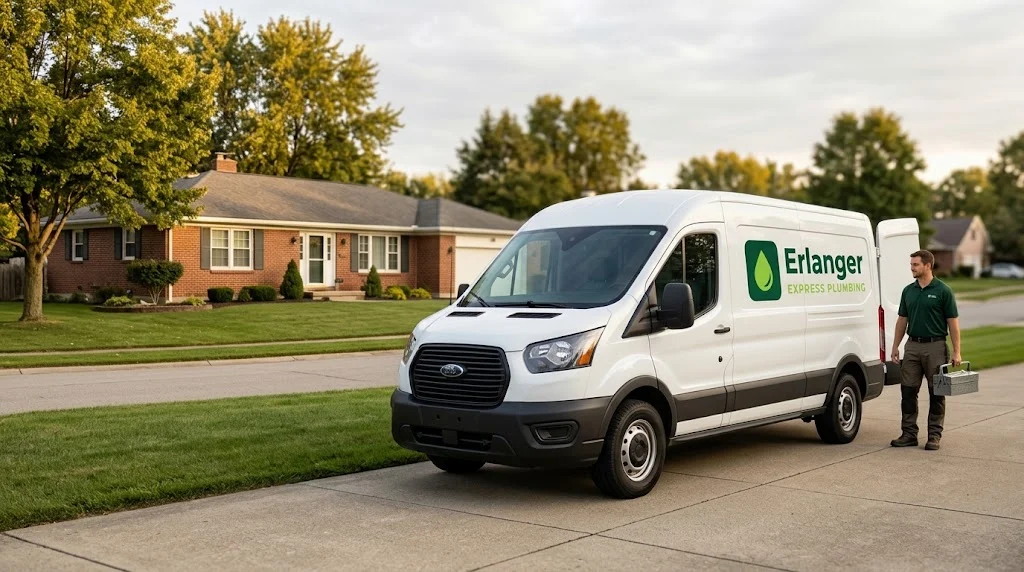
Plumbing In A Town That Grew In Waves
Erlanger was platted in 1887 when the Erlanger Land Syndicate recorded 220 lots, and it was incorporated in 1897. The old core near the depot and Dixie Highway holds houses from that first era, so a pipe problem there can involve very old supply lines or cast iron drains. A camera or pipe inspection shows what a particular house actually has.
The biggest wave came after Interstate 75 opened in the early 1960s. Erlanger led the Cincinnati metro in new construction for three years, and its population grew about 91 percent in the 1960s and 79 percent in the 1970s. Homes from those decades commonly mix copper supply with later drain repairs, which is why a single leak call often turns into a question about how much of the line is worth replacing.
Water here is supplied by the Northern Kentucky Water District, which is headquartered on Crescent Springs Road in Erlanger, and sewer service comes through Sanitation District No. 1. Check your bill to confirm who serves your address. On a sewer problem, ask first whether the blockage sits on the private lateral you own or in the district main, because that decides who fixes it.
Permits And Licensing Without The Guesswork
Kentucky requires a plumbing permit for work like replacing a water heater, a new house sewer or a new water service. Repairing a leak or clearing a waste pipe does not need one. A licensed plumber handles the permit when it applies, and you can check any plumber's license with the state Division of Plumbing.
That matters on a Saturday emergency as much as a planned remodel. A water heater swap done by an unlicensed installer can fail inspection or void other coverage later, so ask for the license before the work starts, not after.