
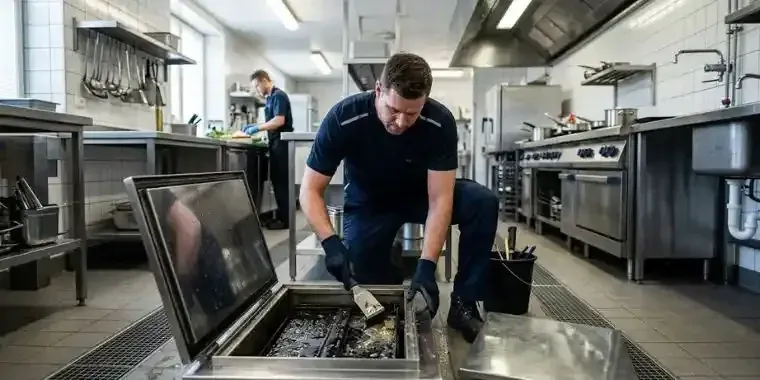
When a pipe lets go in a shop or a drain backs up in a kitchen, the clock is running on lost sales. Commercial plumbing in Erlanger, KY starts with the 24/7 line, and the first job on the phone is to stop the water and protect what is wet.
Commercial buildings are plumbed differently from houses: larger lines, more fixtures on one drain, floor drains, pumps and often equipment that has to stay running. A plumber who does this work reads the building before reaching for tools.
The calls that come from shops, kitchens and rental buildings
A business owner and a property manager rarely call about the same problem. These are the situations that bring most commercial calls.
Water through the ceiling tiles
A line above the drop ceiling is leaking, and the tiles are holding the water until they fail. The plumber traces it from the wet spot back to the source.
Meter turning with the business closed
Water use after hours points to a hidden leak, a stuck valve or a running toilet in a restroom nobody checks.
Floor drain bubbling or overflowing
A kitchen or mechanical room drain that burbles is blocked below the floor, and the cause can be grease, debris or a failing pipe.
One unit's backup in a multi-unit building
When a tenant's fixtures back up, the question is whether the problem is theirs or the shared line. The lowest fixture on the line usually shows it first.
Restrooms out of service
No water, no flush or no drain in a public restroom ends the day for many businesses.
Lift pump or ejector alarms
A pump that runs constantly, or an alarm that will not clear, signals a stuck float, a failed pump or a clogged discharge.
While you wait: protect the building and the stock
Give the dispatcher the street address and who can open the building. Water damage grows fast in commercial space, so start these steps while the plumber is on the way.
Find and close the main
Look for the valve where the water line enters the building, often near the meter or in a utility room. Everyone on site should know where it is.
Stop using fixtures on the affected line
In a backup, do not flush, run dishwashers or empty mop buckets into floor drains.
Protect inventory and electrical
Move stock off the floor, cover shelving under a leak and keep wet areas away from panels and outlets. Turn off power to a wet circuit only if the floor around the panel is dry.
Photograph the damage
Photos of the area and the failed pipe help with the insurance report and let the plumber see the scene.
Commercial systems and how each one tends to fail
Larger buildings have more systems, and each has its own failure pattern. This table lists the ones a commercial plumber sees most.
| System | Typical failure | What the plumber does |
|---|---|---|
| Floor drains | Debris or grease blockage, dry trap smell | Clear the line, restore trap seal |
| Sewage lift pump | Stuck float, burned motor, clogged discharge | Test, clean or replace pump and float |
| Grease interceptor | Full tank, damaged baffle, blocked outlet | Check fittings and inlet and outlet lines |
| Backflow assembly | Failed test, leaking relief valve | Test, repair or replace the assembly |
| Restroom fixtures | Running tanks, leaking flush valves | Repair or replace fixtures |
| Water heater or boiler line | Leaking tank, failed expansion control | Repair, flush or replace the unit |
These are general patterns. The plumber confirms what is wrong at your building and tells you the price before work begins.
Grease, floor drains and the lines behind a kitchen
Restaurants and food service shops send fats, oils and food solids down their drains every day. A grease interceptor catches most of it, but the lines before and after the trap still coat over time. Pumping out an interceptor is usually done by a hauler, while the plumber handles the lines, baffles and fittings.
When a kitchen floor drain starts to back up, hydro jetting the line can scour grease from the pipe walls where a cable only punches a hole. A camera run afterward shows whether the pipe is clear or damaged.
Floor drains in mechanical rooms and garages
These drains collect more than water. Silt, oil and debris settle in the trap, so they need periodic flushing, and a drain that smells is often one that has dried out.
Business closed with water on the floor?
Close the main, name a keyholder and call. The line is open nights, weekends and holidays.
Arranging after-hours access without losing a night
Commercial calls are often at night, when the building is locked. A little planning removes the most common delay.
- 1
Name a keyholder
Tell the dispatcher who can open the door and how fast. A building nobody can enter cannot be fixed.
- 2
Describe where the water is going
Say which floor, which unit and whether it is clear or dirty. This lets the plumber choose tools and parts before leaving.
- 3
Shut the main and clear the area
Close the supply and move people away from wet floors. A dry, lit work area speeds the repair.
- 4
Walk the plumber through the layout
Show the shutoffs, the cleanouts and the mechanical room so the plumber does not have to search.
- 5
Sign off on scope and price
Before any repair starts, the plumber states what the work is and what it costs.
Dixie Highway shops, Circleport warehouses and what each needs
Dixie Highway is the main commercial corridor in Erlanger, and many storefronts along it share walls and drains with their neighbors. When a shared line fails, a leak in one unit can wet the next, so the plumber looks at the connection between suites and not only at the room you call from. Ask your landlord who owns the shared line before you pay for a repair.
The industrial area around the Cincinnati airport, including Mineola Pike and the Circleport business area, has larger buildings with long runs of supply and drain pipe. Those sites more often have floor drains and pumps, and the size of the building affects how long it takes to locate a leak. A leak locating visit can narrow it before anything is opened.
Tenant or owner: who calls and who pays
Commercial leases differ, so the first call is often to the property manager. The plumber still needs to be told who is authorized to approve work.
Usually the tenant's concern
- Fixtures and equipment inside the suite
- Drains serving only that suite
- Kitchen or salon equipment hookups
- Floor drains in the leased space
Usually the owner's concern
- Main supply and shared drain lines
- Roof, riser and mechanical rooms
- Backflow assemblies on the building
- Pumps serving several tenants
Read your lease, and have the authorized contact on the phone. When the problem is hidden, locating a concealed leak settles whose line it is.
Tell the dispatcher these things
A short, complete description gets the right plumber and the right tools to the site.
- Street address and the suite or floor affected
- Whether the water is clear or dirty
- Whether you have closed the main
- Who can open the building and the phone number to reach them
- What type of business and what equipment is nearby
- Who is authorized to approve the work
How commercial plumbing work is priced
Commercial jobs vary more than residential ones, so a price on the phone is only a starting point. The plumber assesses the building and states a clear price before work starts.
Size and age of the system
Longer lines and older materials take more time to trace and repair.
Access to the problem
Pipes above ceilings, below slabs or behind equipment need more labor to reach.
Equipment involved
Pumps, interceptors and backflow assemblies bring parts and testing into the quote.
Business hours and shutdown needs
Work that has to happen outside open hours, or with the water off, is planned around your schedule.
Time of the call
After-hours dispatch is priced differently from scheduled maintenance, and the plumber says which applies.
A commercial property policy may respond to sudden water damage, depending on its terms and any exclusions. Photograph the damage, save the failed parts and notify your insurer and your landlord promptly. The plumber can describe what failed and what was done.
Call with the address and the problem, and get a clear price before work starts.
Call (859) 900-9164Commercial Plumbing Questions From Erlanger Homeowners
Yes. The 24/7 line is open for businesses as well as homes, and same-day appointments are offered when available. Leaks, backups and restroom failures are dispatched as emergencies.
Have a keyholder ready, close the main if you can, and keep the area clear while you wait.
Yes, including floor drains, kitchen lines and fixture repairs. Grease interceptor pumping is usually done by a hauler, and the plumber handles the connected lines and fittings.
Tell the dispatcher what is backing up and where.
Check other units, especially those on lower floors. If more than one suite has slow drains or gurgling, the shared line is likely blocked.
That calls for cleaning the main sewer line, and the building owner usually authorizes it.
Often, yes. A meter test, listening equipment and sometimes a camera can narrow the search before anything is cut. The result is a smaller opening and a faster repair.
The plumber explains the limits before starting.
It prevents water in the building from flowing backward into the public supply. Many water providers require periodic testing on commercial connections, so check the notices from your provider and ask NKWD if you are unsure.
Adding a backflow device to an existing water service needs a state permit under 815 KAR 20:050.
Yes. Calls for rental buildings are common, and the plumber works with the property manager on access and approvals. A tenant's fixture is one problem, while a shared riser or main is another.
The same dispatch covers nearby towns. Give the address when you call, and the dispatcher can tell you what to expect.