
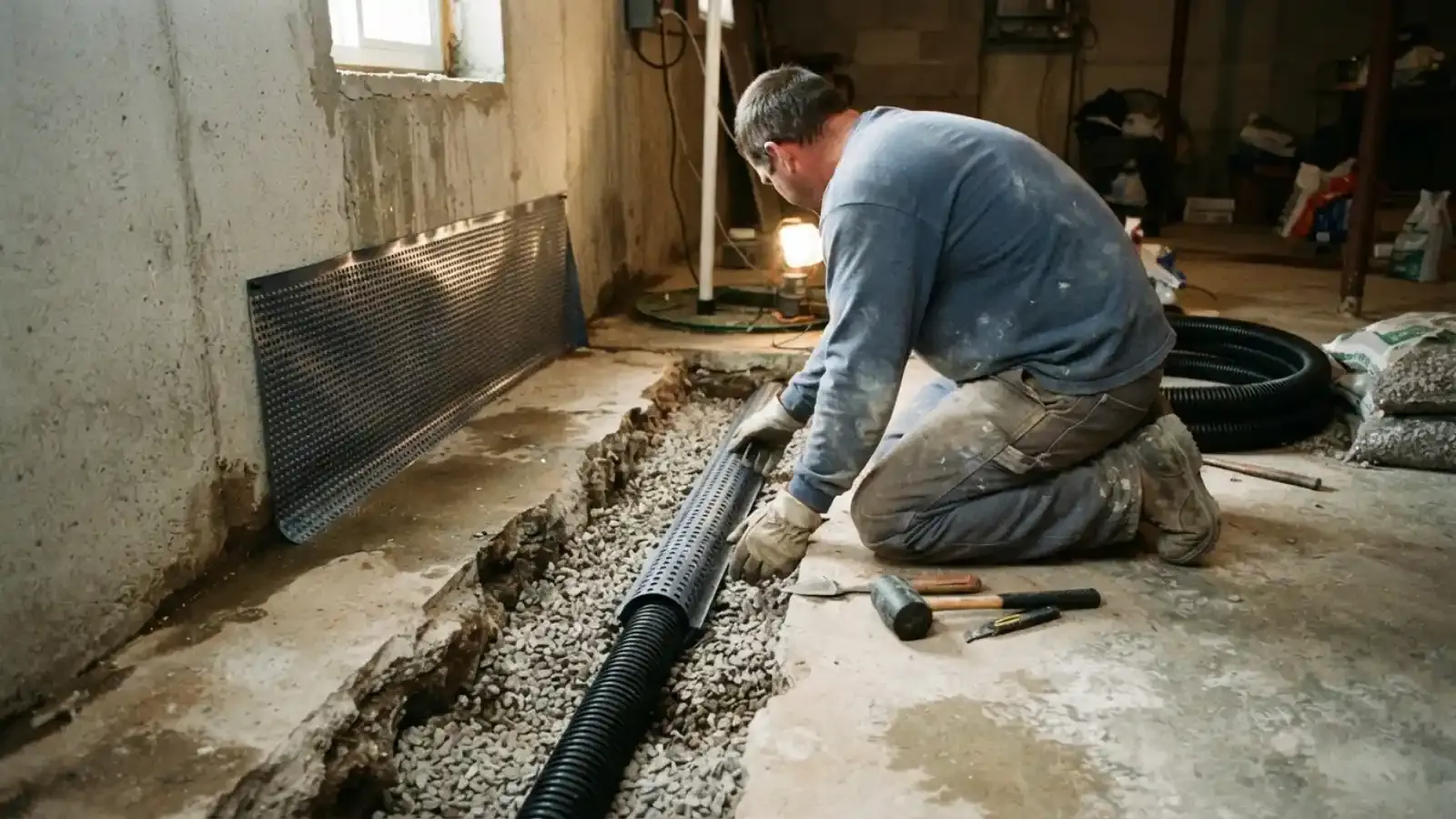
Basement waterproofing in Erlanger, KY is the work of keeping groundwater and surface water from reaching a finished or stored-in lower level. For a plumber, that means collecting water that does get in, moving it to a sump, and pumping it out.
It starts with finding where the water comes from. A leaking supply pipe, a failed drain, roof runoff and rising groundwater can all leave a puddle, and each needs a different answer.
A plumber's job and a foundation contractor's job
Waterproofing covers two trades. Knowing who does what saves you from paying for the wrong fix.
Plumbers handle
- Interior perimeter drain tied to a sump
- Sump pump, check valve and discharge line
- Supply and drain leaks that mimic seepage
- Floor drains and backwater valves
- Gutter downspout drain connections
Foundation contractors handle
- Cracks in poured walls and block
- Exterior excavation and membranes
- Wall bracing and bowing repairs
- Regrading around the house
- Structural settlement problems
If your problem is structural, a plumber can still manage the water. We will not tell you a drain fixes a wall that is moving.
Tracing wet basement water back to its source
The sequence below catches the cheap, common causes before anyone talks about digging.
- 1
Rule out plumbing
Check the water heater, supply lines, washer hoses and drain traps. A meter test with everything off shows a supply leak.
- 2
Look at the roof and gutters
Overflowing gutters and short downspouts dump roof water beside the foundation. Extend downspouts several feet from the wall.
- 3
Check the grade
Soil should slope away from the house. A flat or reversed slope sends rain toward the wall.
- 4
Read the water pattern
Water at the floor-wall joint after rain points to groundwater pressure. A wet spot with no rain points to plumbing.
- 5
Decide where to collect
If water enters low along the wall, an interior drain and sump can collect it. If it enters through cracks high on the wall, sealing or exterior work may be needed.
Gutters, downspouts and grade come first
Roof water is the cheapest water to fix. A medium roof sheds a great deal of rain in one storm, and if the downspouts empty at the foundation, that water goes straight down along the footing. Moving the discharge several feet out can change a damp basement into a dry one.
We will tell you if the cause looks like surface water before selling you a drain. Underground downspout lines are a plumbing task, and adding a connection to a storm drain or a safe outlet is part of the job where it applies. A downspout must not be tied into the sanitary sewer.
What each waterproofing option really does
Each approach solves a specific problem. Using the wrong one is the usual reason fixes fail.
Interior perimeter drain
A channel along the base of the wall, set below the slab edge, collects seepage and sends it to a sump. It manages water. It does not stop it entering.
Sump pit and pump
The low point that receives the drain water and pumps it outside. A sealed lid cuts humidity and noise.
Wall and floor sealers
Paint-on coatings can slow dampness through masonry. They do not hold back real pressure and often peel.
Crack injection
Epoxy or polyurethane fills a single crack. It does not cure groundwater pressure across the whole wall.
Backwater valve
Stops sewer water from rising through a floor drain. It treats a backup, not groundwater.
Exterior membrane and drain tile
The most complete fix, done by digging down to the footing. It is a larger project, often with a foundation contractor.
Find out where the water comes from first
Call to schedule a look at the basement. We check plumbing, roof water and grade before suggesting a drain.
Matching the symptom to the likely cause
Water in a basement leaves clues. This table shows common ones and where they usually lead.
| What you see | Likely cause | First move |
|---|---|---|
| Puddles along the wall after rain | Groundwater or roof runoff | Check gutters, then drainage |
| Damp floor, dry weather | Plumbing leak | Run a meter test |
| White powder on block walls | Moisture moving through masonry | Reduce source, then seal |
| Water from floor drain | Sewer backup or overloaded drain | Stop using drains, call |
| Wet spot under a pipe | Condensation or leak | Insulate or repair |
| Single crack leaking | Settlement or pressure point | Inject or call a contractor |
White mineral deposits on masonry are a sign of moisture moving through, not by themselves proof of an active leak.
Questions to ask before you hire anyone for a wet basement
These keep the conversation focused on the cause.
- Did they find where the water enters, or just offer a package?
- Did anyone check plumbing lines and the water heater?
- Is the quote itemized by drain, sump, discharge and finish?
- Will they explain what is and is not covered by the work?
- Is a permit needed, and who pulls it?
- Are gutters and grading addressed first?
Local water, SD1 and the Banklick watershed
Erlanger lies in the Banklick Creek watershed, which SD1 describes as 58.2 square miles in Kenton and Boone counties, with flooding a recurring problem. That is a watershed-level fact, not a statement about your basement. Treat it as a reason to size the pump and discharge with care.
If sewage, not groundwater, is coming through a floor drain, that is a sewer matter. SD1's published Backup Assistance Program covers backup prevention devices after verified wet-weather backups, and it excludes backups from a defective lateral. Confirm current terms with SD1 and see sump pump service for the groundwater side.
The limits of sealing and what a plumber will not promise
Coatings and sealers are sold hard, and they are the weakest answer to real water pressure. A coating on the inside face of a wall cannot stop water pushing from outside, and it may trap it behind the paint. We will not recommend a sealer as the main fix for an actively wet wall.
We also do not repair bowing walls, wide cracks or settlement. If the wall is moving or a crack is growing, a structural or foundation contractor needs to look first. Our job is to handle water with drains and pumps, and to be honest about where that stops.
What drives the cost of a basement water project
Waterproofing prices vary widely because the work does. After we find the cause and the scope, you hear a clear price before work starts.
Length of wall to drain
A drain along one wall is far less work than a full perimeter.
Floor type and finish
Cutting concrete is dusty and slow. Finished walls and flooring add removal and rebuild.
Sump size and number
Larger pits and pumps, or two pits, add parts and labor.
Discharge routing
A short line out the wall is simple. Longer runs, buried lines and connections to a safe outlet add work.
Backup power and alarms
A battery backup and a high-water alarm add equipment but protect during outages.
Standard homeowners coverage often excludes groundwater seepage and drain backup unless you carry a water backup endorsement. Ask your insurer before work begins, and keep photos and our written findings in your file.
Call to schedule a look at your basement and get a clear price.
Call (859) 900-9164Basement Waterproofing Questions From Erlanger Homeowners
Sometimes. A supply or drain leak can mimic seepage, which is why plumbing is checked first. If the water comes from outside, the answer is drainage, which a plumber can handle in part.
Install an interior drain along the wall, a sump pit and pump, and a discharge line outside. That collects water and removes it. It does not seal the wall.
It can reduce dampness from vapor, but it will not hold back real water pressure. Coatings often peel when water pushes from the other side.
Moving or adding drain openings or a new sewer connection can require a plumbing permit under 815 KAR 20:050, and a licensed master plumber can pull it. Ask when you call.
Yes. Clean gutters and downspouts that discharge well away from the foundation are the cheapest improvement and often solve part of the problem.
We do not do structural repair. A narrow crack leaking water can often be injected, but a growing or horizontal crack needs a foundation contractor.