
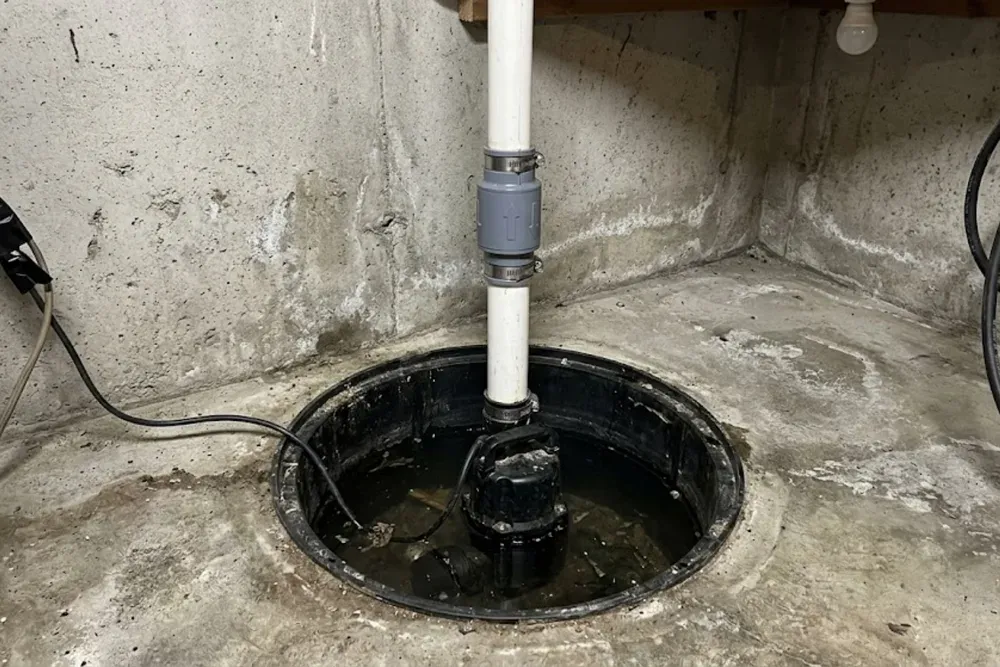
If the pit is filling and the pump is silent, call the 24/7 line now. Unplug nothing while standing in water. Move stored items off the floor, shut off power to any wet circuit from a dry panel, and keep children and pets out of the area.
Sump pump repair in Erlanger, KY means getting water out of the pit before it reaches the floor. That can be as simple as freeing a stuck float or as involved as replacing a pump, a check valve and a failed discharge line.
Ways a sump pump quits on you
Most failures come from a short list of parts. Knowing which one helps the plumber bring the right pump and fittings.
Float stuck in the pit
The float rides against the wall or snags on the cord, so the pump never gets the signal to start.
Motor runs but little water moves
The impeller is clogged with grit, or the check valve is jammed shut. The pump hums and the pit keeps rising.
Pump cycles every few minutes
A failed check valve lets water fall back into the pit. The pump is not broken, it is working the same water over and over.
No power
A tripped breaker, a GFCI that popped or a damaged cord. This is the first thing to check and the most common surprise.
Loud grinding or rattling
Worn bearings or debris in the pit. The motor is on its way out and will often fail under heavy load.
Burned motor after a long run
Heat and age kill the winding. It usually happens in the longest, wettest hours, which is the worst time.
Water in the pit and rising: what to do now
Buy yourself time and keep the damage off the floor. Do these in order and stay out of standing water.
Check the plug and breaker
Look at the GFCI outlet and the circuit breaker. Reset once. If it trips again, leave it alone and call.
Lift the float by hand
If the float is free, raise it with a stick. A running pump means the float is stuck. A silent one means a dead motor or no power.
Bail if you must
Use a bucket or a wet vac to lower the pit. Take photos first for your records.
Move valuables and unplug low outlets
Get boxes up on shelves. Only unplug equipment that you can reach from dry ground.
A quick bench check before calling
These checks take a few minutes with a flashlight. They do not replace a repair, but they help the dispatcher plan.
- 1
Look at the pit
Is the lid on? Is there standing debris, silt or a floating cord? Note anything that looks wrong.
- 2
Listen
A hum with no flow points to a clogged impeller or closed check valve. Silence points to power or a dead motor.
- 3
Follow the discharge pipe outside
Look for the outlet in the yard or at the foundation. Ice, mud or a crushed pipe can block it.
- 4
Count the cycles
If the pump starts and stops often with little rain, a failed check valve or a high water table may be the cause.
Symptom, likely part and typical fix
This table shows common pairings. The plumber confirms on site before changing anything.
| What you notice | Likely part | Typical fix |
|---|---|---|
| Pump will not start | Float, cord or motor | Free float, or replace pump |
| Runs but pit stays full | Impeller or check valve | Clean or replace |
| Short cycling | Check valve | New check valve |
| Pump runs nonstop | Stuck float or undersized pump | Reset float, or resize |
| Water by the discharge outlet | Crushed or iced pipe | Clear or reroute |
| Tripped breaker | Failing motor or wiring | Test circuit, replace pump |
A pump that is several years old and failing for the second time is usually cheaper to replace than to keep fixing.
Rain is still falling and the pit is full
Call now. A plumber can restart, repair or replace the pump and get water moving out again.
Battery backup for the day the power goes out
Storms that fill the pit can also knock out power. A battery backup sits beside the main pump with its own float and a sealed battery. When the primary quits or loses power, the backup takes over and keeps pumping for several hours, depending on the inflow.
A backup is not the same as a second main pump. It is smaller, runs on stored power and is meant to bridge an outage. For homes where the pit fills fast, a water-powered backup is another option, though it needs a good municipal water supply and a suitable drain.
Discharge lines and check valves: where installs go wrong
The pump is only half the system. The discharge pipe carries the water outside, ideally to a spot well away from the foundation where it will not run back toward the house. A pipe that drains at the wall defeats the pump and keeps the soil near the footing wet.
The check valve sits just above the pump. It stops water in the pipe from falling back into the pit when the pump shuts off. These valves wear out, and a clicking sound after each cycle is a common sign. A small weep hole in the discharge line, drilled just above the pump, keeps the pump from air-locking.
Pedestal pump or submersible: choosing for your pit
Both types move water. They differ in noise, lifespan and how they handle debris.
Pedestal pump
- Motor sits above the pit, easy to reach
- Usually lasts longer
- Louder and visible in the room
- Works in narrow pits
- Needs a clear pit and a steady float
Submersible pump
- Sits in the water, runs quietly
- Handles more debris
- Cooled by the water around it
- Harder to inspect
- Often the choice for new installs
Pit depth, pit width and how fast it fills guide the choice more than brand talk does.
The Banklick watershed and the SD1 backup program
Erlanger sits within the Banklick Creek watershed, which covers 58.2 square miles in Kenton and Boone counties. SD1's watershed report says flooding has been a recurring problem there, and Doe Run Lake was built in 1982 to help control it. That does not mean any one house floods. It means a working sump and discharge line is sensible insurance for a house in this watershed.
SD1 also has a published Backup Assistance Program. Under its published policy, help toward a backup prevention device installed by a licensed plumber is limited to properties with at least two wet-weather backups within five years, verified by SD1. Backups from inadequate internal plumbing or a defective lateral do not qualify. Confirm current terms with SD1 before you buy anything.
A sump pump handles groundwater around the foundation. Sewage backing up through a floor drain is a different problem with a different fix, such as a backflow valve. We tell you which one you have.
Putting in a new pit and pump from scratch
A new installation starts with a diagnosis. The plumber checks where water is entering, whether gutters and grading are contributing, and whether the floor needs a perimeter drain feeding the pit. Drain tile and pit work involve breaking concrete, so this is a planned job with a clear price first.
Plan for a sealed lid, a check valve, a discharge line routed away from the foundation, an outlet on its own GFCI circuit and, where it fits, a battery backup. Moving or adding drain openings can require a plumbing permit under 815 KAR 20:050, which a licensed master plumber can pull. For the full waterproofing picture, see basement waterproofing options.
What sets the price of a pump repair or install
A float swap and a full new pit are very different jobs. You get a clear price before work starts, and the plumber explains each part of it.
Repair or replace
A cleaned impeller or new check valve costs less than a new pump. Age and repeat failures push toward replacement.
Pump type and horsepower
Larger pumps move more water and cost more. Pit size and inflow set the right size.
Backup system
A battery backup adds equipment and an extra outlet, but protects through outages.
Discharge routing
A short run out a rim joist is simple. Longer or buried runs add labor and may need digging.
New pit or existing pit
Cutting concrete and setting a new basin is a bigger job than swapping a pump into an existing pit.
Standard homeowners policies often exclude groundwater and sump failure unless you added a water backup endorsement. Ask your agent what yours covers. Keep photos, the old pump and our written findings in case you file.
Call the 24/7 line and tell us what the pump is doing.
Call (859) 900-9164Sump Pump Installation and Repair Questions From Erlanger Homeowners
Yes. The line is open 24/7, and the plumber who comes out can swap a pump, free a float or fix a check valve on the same visit when parts allow.
Pump life varies from several years to about a decade, and heavy use shortens it. If yours is old and has started to short cycle or hum, plan for a replacement.
Common causes are a stuck float, a failed check valve or high groundwater. If it runs in dry weather, call so the cause can be found.
It is wise if your pit fills quickly or power drops during storms. The backup is meant to bridge an outage, not replace the main pump.
It should not. Groundwater belongs outside, away from the house. Sending it into the sanitary sewer is a problem for the sewer system, so ask SD1 and your plumber before connecting anything.
SD1's published Backup Assistance Program is about backup prevention devices after verified wet-weather backups, not sump pumps in general. Confirm current terms with SD1.
Usually the check valve closing. A loud bang or water falling back into the pit means the valve is worn and should be replaced.