
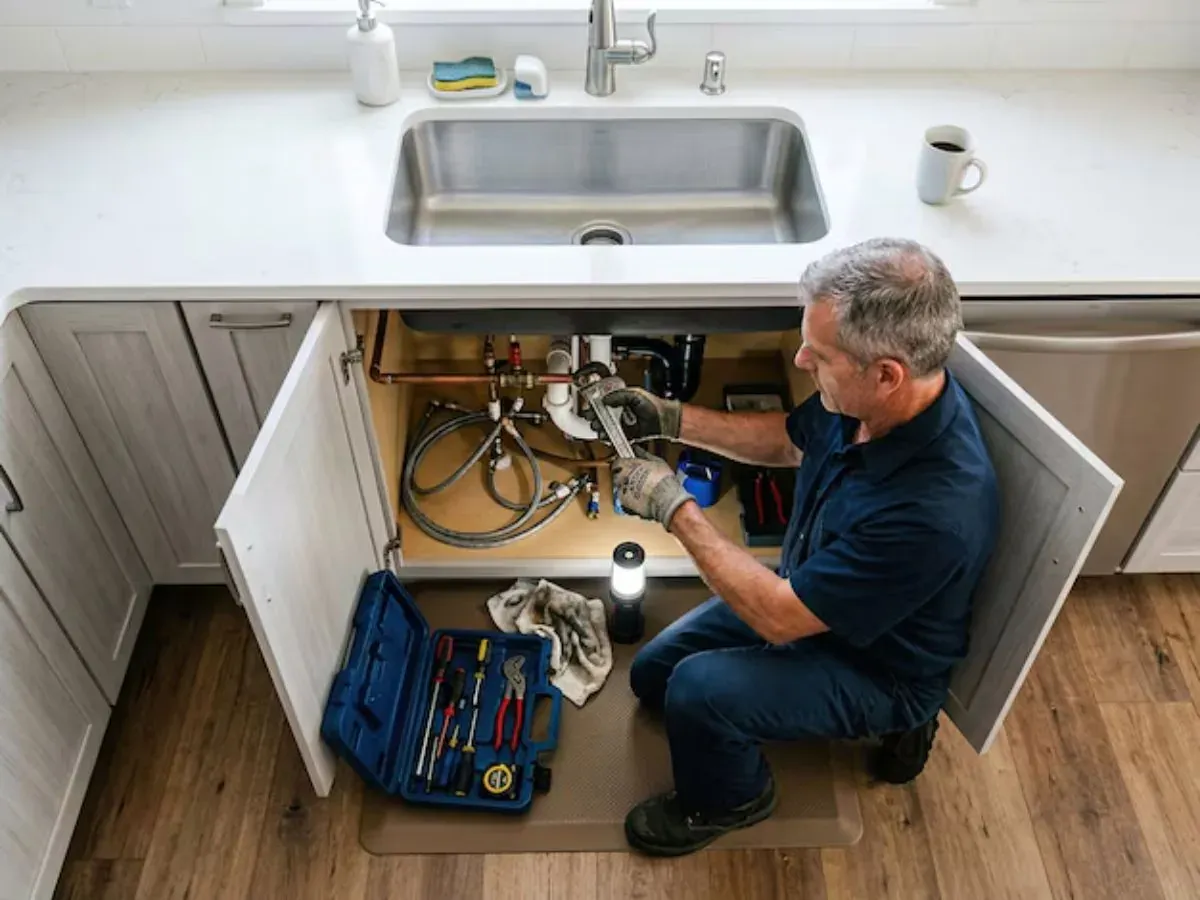
Plumbing installation in Erlanger, KY covers any work that adds a fixture or moves one: a new vanity, a relocated kitchen sink, a basement bathroom, a laundry hookup or a shutoff valve where there was none. Each job connects to two systems, clean water coming in and waste going out.
What makes installation go well is the planning. Where the supply lines run, how far the drain sits from the vent, and whether a permit applies all affect the schedule, so this page starts with the questions the plumber will ask.
The three questions every installation starts with
Before any fixture is ordered, the plumber needs to know what is behind the wall and under the floor. Three questions drive the plan, and most delays on the day come from skipping one.
Where is the nearest hot and cold supply? Where does the drain connect, and does it have enough fall to move waste away? Is there a vent close enough to keep the trap from siphoning dry? A fixture that is only a few feet from existing lines is simple. One across the house is a small remodel.
Why the drain decides the layout
Supply lines are small and can bend around obstacles. Drains are bigger and need a steady downhill slope, so the drain location often fixes where a fixture can go.
Which jobs need a state permit and which do not
Kentucky's Division of Plumbing sets the permit rules in 815 KAR 20:050. This table summarizes that list, and you can confirm any specific job with the Division.
| Type of work | Permit listed in the rule? | What it means for you |
|---|---|---|
| New plumbing for an addition or remodel | Yes | Plumber pulls the permit before work |
| Moving a fixture or a waste opening | Yes | Applies when the sink or tub changes places |
| Replaced water service or house sewer | Yes | Covered under its own permit |
| Water heater installation or replacement | Yes | A separate permit applies |
| Adding a backflow device to a water service | Yes | Plumber handles the paperwork |
| Repairing a leak, cock or valve | No | Simple repairs need no permit |
Kentucky does not list a permit for cleaning waste or sewer pipes, either. Kenton County Planning and Development Services handles zoning and building permits for the city, which is a separate office from the state plumbing permit.
From fixture on the box to water at the tap
Most installations follow the same path. Knowing it helps you ask about the part that interests you.
- 1
Confirm the fixture and its rough-in size
Toilets, tubs and sinks have a standard spacing for their drain and supply openings. The plumber checks the box against what is in the wall.
- 2
Shut off and open up
Water is closed at the nearest valve or the main. Wall or floor openings are cut only where needed.
- 3
Rough-in the pipes
New supply branches and drains are placed, vented and secured, and pressure-tested before anything is closed.
- 4
Set and connect the fixture
The fixture is mounted, with new supply lines, stops and a trap suited to it.
- 5
Test under real use
Water runs, the drain is filled and emptied several times, and every joint is checked dry.
Hookups that often come along with a fixture install
Many jobs add a second piece of equipment. These are the extras that come up most often.
Water softener and filter connections
These need a bypass valve, a nearby drain for the brine or backwash and power. The plumber also checks that shutoffs allow service later.
Under-sink filtration
Reverse osmosis units need a cold tap, a drain saddle and room under the sink. Test your tap and read the NKWD water quality report to decide if you need one.
Washing machine boxes
A recessed box with two valves and a drain standpipe keeps hoses off the floor and makes a leak easier to isolate.
Outdoor spigots
A frost-resistant hose bib placed where the supply line is easy to reach avoids a freeze split. Plan it before walls are closed.
Dishwasher and ice maker lines
Small stops and braided lines are cheap to add and save a flood later.
Planning a remodel or a new fixture?
Call to describe the job. The plumber asks about supply, drain and permit before giving a clear price.
Replacing a fixture in place or moving it across the room
The easy installs and the hard ones sit on opposite sides of a single question: does the fixture stay where it is?
Same location
- Uses the existing supply and drain
- Often done in one visit
- Rarely needs wall or floor openings
- Ask the Division about like-for-like swaps
New location
- Needs new supply, drain and vent runs
- May need floor or wall openings
- Takes planning and a permit
- Lets you reshape the room
A faucet or toilet swap in the same spot is closer to a repair. For a worn fixture, repairing the existing faucet may suit the job better than a new one.
A note on gas lines
This page does not cover gas piping. If you smell gas anywhere, leave the building and call the gas utility whose number is on your gas bill, or 911, from outside before you call a plumber. Before any digging, call 811.
Remodels in a city that grew in waves
Erlanger's housing stock grew from 6,865 units in 2000 to 8,249 in 2020, and much of what stands was built in the 1950s through the 1970s boom. In homes of those years, drains were commonly cast iron or plastic and supply lines steel or copper, though a pipe inspection shows what a particular house has. A new fixture should be tied into whatever material is already there, and the plumber checks the condition of that pipe first.
Historic Erlanger, between Riggs Avenue and Crescent Avenue, and Central Erlanger, between Sunset Avenue and Commonwealth Avenue, are named areas in the city. If your house is in an older part of town, plan for extra time for opening walls and for the chance of mixed pipe materials.
What to have ready before the plumber arrives
A little preparation shortens the visit and cuts down on surprises.
- The fixture itself, or the model number if still ordering
- Clear access to the wall or cabinet where it will go
- The location of the main water shutoff
- Notes on any past leaks or repairs in that area
- Any drawings or sketches for a remodel
- A decision on who handles the patching and painting
What shapes the price of a plumbing installation
Installation prices depend on how much pipe has to change, not just on the fixture. The plumber reviews the job in person and gives a clear price before work starts.
Distance to existing lines
A fixture next to current supply and drain connections is short work. Each added foot of pipe adds parts and time.
Venting and slope
A fixture that cannot be vented or drained easily at its new location may need extra framing, pipe or a different layout.
Access and finishes
Open basements are easy. Tile, plaster and cabinets raise the time needed to open and repair around the pipes.
Fixture type and size
A freestanding tub, a double vanity or a tankless unit has more connections than a basic sink.
Permit and inspection
Jobs that need a permit include the paperwork and any inspection in the scope.
Planned installations are normally paid by the homeowner and not by an insurer. If the work follows a covered loss such as a burst pipe, keep the invoices and ask your insurer what documentation it needs.
Call to talk through the job and hear the price before booking.
Call (859) 900-9164Plumbing Installation Questions From Erlanger Homeowners
Usually yes. Bring the model number so the plumber can check the rough-in size and the parts it needs. Some fixtures come without supply lines or drains, which are added separately.
If the fixture is damaged or the wrong size, it is better to find out before the install day.
Under 815 KAR 20:050, new plumbing and moving fixtures are on the list of work that requires a permit. A licensed master plumber can pull it. A homeowner can pull one for a house they live in, but only if they do all the work and follow code.
Confirm the current requirement with the state Division of Plumbing.
A like-for-like swap is often a matter of a few hours. A relocated fixture or a basement bathroom takes longer because pipes are run, vented and tested.
The plumber gives you a schedule when the job is reviewed.
Yes, in most cases. The plumber needs a bypass valve, a drain for the discharge and power. If the unit was set up before, the old connections are checked for leaks and wear.
A new water heater is often a good time to add a softener loop.
Yes, if they are old and rarely used. Stops that seize or weep are the first thing you will curse when something breaks. New quarter-turn valves are cheap compared to the labor of reaching them later.
This page does not cover gas piping. If you smell gas, leave the building and call the gas utility or 911 from outside first.
For plumbing work around a gas appliance, mention it when you call so the plumber can plan the visit.