
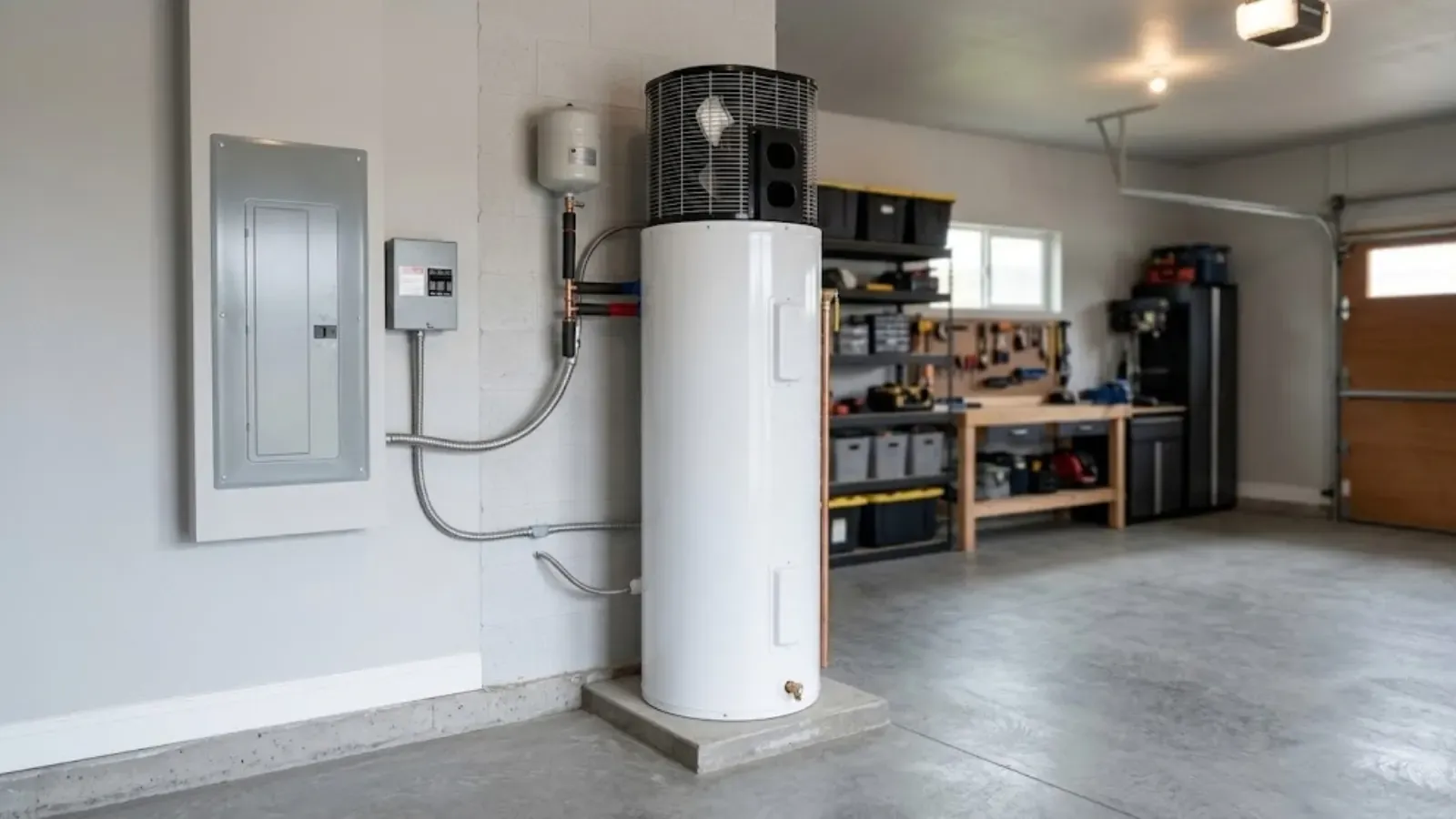
Water heater installation in Erlanger, KY is the planned version of the job: you pick the fuel, the tank size and the location, and the work is booked for a day that suits you. Nobody is mopping a floor while they decide.
That calm is worth using. The choices you make now, such as where the tank sits, how it vents and whether it has a drain pan, decide how easy it is to service for the next ten to fifteen years. Kentucky also requires a plumbing permit for installing a water heater, and the plumber handles it.
Electric, Gas or Heat Pump: Picking the Fuel
Fuel is the biggest planning decision because it changes what has to be run to the tank.
Electric and heat pump tanks
- Need a dedicated circuit sized to the unit
- No flue, so placement is flexible
- Heat pump models need clearance and air volume
- Heat pump units produce condensate that needs a drain
- Lower upfront complexity for simple swaps
Gas tanks
- Need a gas line, shutoff and drip leg
- Require a flue that rises and seals correctly
- Recover hot water quickly after heavy use
- Need combustion air in the space
- Switching to gas adds line and vent work
The best fuel is often the one already in the house. Switching is possible, but the extra piping, wiring or venting is where a planned install's cost comes from.
Where the Tank Should Sit
Location gets less thought than it deserves. A few inches of clearance or a missing floor drain can matter more than the brand on the tank.
Near a floor drain
A tank that fails and discharges onto bare concrete beside a drain is a cleanup. The same failure over a finished floor is a repair project.
Close to where hot water is used
Long hot lines waste water waiting for warm to arrive. Moving the tank closer to the kitchen and baths shortens the wait.
With room to service it
Anode rods, drain valves and access panels need elbow room. A tank boxed into a closet gets skipped at maintenance time.
Away from stored chemicals
Gas units sit next to a pilot or burner. Paint thinner and cleaners belong across the room, not on the shelf above.
Out of freezing spaces
A tank in an unheated garage or crawl space loses heat faster and puts exposed pipes at risk in cold snaps.
Permit and Code Items Written Into the Job
Kentucky's 815 KAR 20:050 lists installing or replacing a water heater among the work that needs a plumbing permit, and KRS 318.134 requires it before the work begins. A licensed master plumber can pull the permit. A homeowner can do so for their own occupied home with an affidavit, but must personally do all the work and follow code.
Typical code items include a temperature and pressure relief valve with a discharge pipe run to a safe spot and a shutoff valve on the cold supply. Some installs add a drain pan or an expansion tank where the water system is closed. The plumber confirms which apply when the price is set.
Ready to Plan the Install?
Call and describe your current tank, the fuel you have and what you want changed. A plumber will walk you through the options.
What the Installation Day Looks Like
A planned install usually follows this order, so you can clear the area and arrange the day.
- 1
Walk the site
The plumber checks the path from the door to the tank, the existing shutoffs and the venting or electrical in place.
- 2
Shut off and drain
Water to the house is closed for part of the day. Plan around laundry and showers, and tell everyone at home.
- 3
Remove and prepare
The old tank comes out, and corroded fittings, flex lines and the flue are replaced as needed.
- 4
Set and connect
The new tank is leveled, piped, wired or gassed and vented. The relief valve discharge and any expansion tank are added.
- 5
Test and explain
After fill, purge and a leak check, the plumber shows you the shutoff, the thermostat setting and what to do if something looks wrong.
Preparing Your Home Before the Install
A little prep keeps the visit short and the work clean.
- Clear a path from the front door to the tank area
- Move stored items at least a few feet from the heater
- Let the plumber know about any past leaks or odd noises
- Decide on your preferred tank size and fuel ahead of time
- Check whether your home's electrical panel has a free breaker space
- Turn the thermostat target to the Department of Energy suggested 120F after install
- Plan where the household will wash up during the shutoff window
Planned Install Options at a Glance
This table helps you shortlist before the plumber arrives.
| Option | Best fit | Watch out for |
|---|---|---|
| Standard electric tank | Simple swaps in any utility room | Dedicated circuit and breaker space |
| Standard gas tank | Homes already piped for gas | Flue slope, combustion air and gas line size |
| Hybrid heat pump tank | Large utility rooms with air volume | Height, clearance and condensate drain |
| Tankless unit | Homes that want continuous hot water | Gas sizing, vent changes and higher upfront work |
| Larger tank than before | Growing households | Floor space and ceiling height |
Tankless units have their own planning needs, covered on the tankless page.
Planning Around Older Erlanger Homes
Erlanger added thousands of homes during its 1950s to 1970s building boom, and many of those houses are now on their second or third water heater. Pre-1960 supply lines in homes of that era were often galvanized steel, with copper common later, and a pipe inspection shows what a particular house actually has. An old shutoff that will not close should be replaced during the install, not worked around.
If your house is in Fort Mitchell or another nearby town, the process is the same. Call ahead to talk through options and pick a date.
What Moves the Price of a New Installation
A scheduled install is priced from the plan, so you see the number before any work starts.
Unit type and capacity
A heat pump or high-efficiency tank costs more than a basic unit, and larger tanks cost more at every size step.
Fuel conversion
Switching from electric to gas or back adds gas piping, wiring or new venting.
Relocation distance
Moving the tank means longer supply, drain and vent runs and sometimes opening walls.
Code add-ons
Expansion tanks, drain pans and discharge piping depend on what the house already has.
Permit coordination
The plumber files and manages the permit, which is part of the job and not an afterthought.
Installing a new water heater is a planned improvement, so insurance does not normally pay for it. Some utilities and manufacturers offer efficiency rebates on certain models. Ask the plumber for the model information and check current programs yourself.
Call to talk through your options and get a clear price before the date is set.
Call (859) 900-9164Water Heater Installation Questions From Erlanger Homeowners
Most standard installs run a half day, from shutoff to final test. Moving the tank, changing fuel or adding venting can stretch it. The plumber gives you a realistic window when you schedule.
Yes, if the home has gas service and a path for a gas line and flue. It adds a gas line, a shutoff, a vent and a permit review, so the work is bigger than a like-for-like swap. If you smell gas at any time, leave the building and call the gas utility or 911 from outside.
The U.S. Department of Energy suggests 120F as a starting setting. Higher settings use more energy and raise scald risk, particularly where young children or older adults live.
It can be, if the space has enough air volume, clearance for the unit and a place for condensate to drain. A cramped closet is usually not a good spot. The plumber checks the room before recommending one.
Kentucky's 815 KAR 20:050 requires a plumbing permit for installing or replacing a water heater. Kenton County Planning and Development Services handles zoning and building permits, but your plumber deals with the state plumbing permit.
Water to the house is typically off for part of the job while the old tank is disconnected and the new one is connected. Plan showers and laundry around it and ask the plumber for an estimate of how long on your day.