
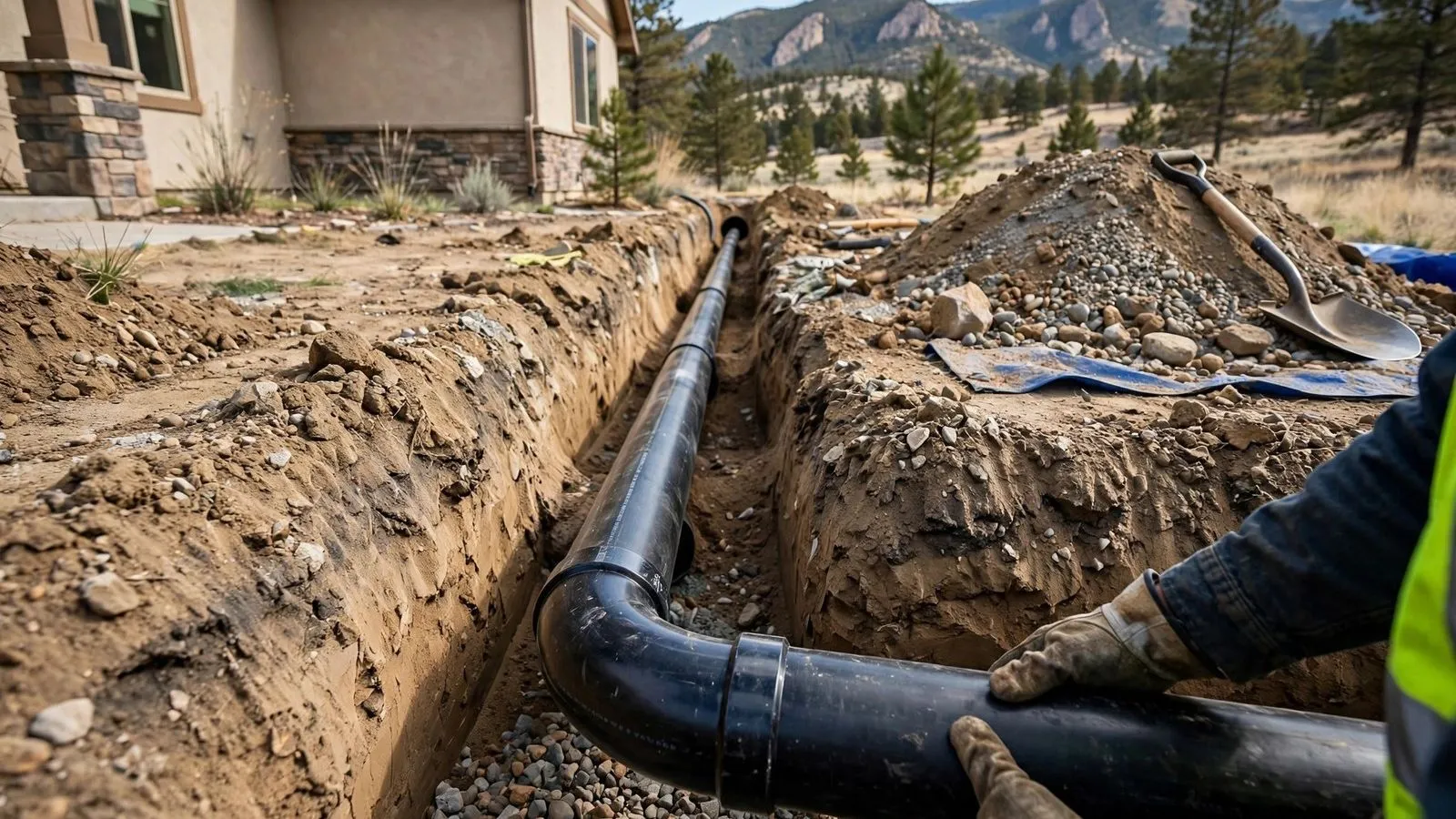
Sewer line repair in Erlanger, KY covers fixing or replacing the buried pipe that carries wastewater from your house to the public sewer. The work ranges from a single cut-in section to a full new lateral.
A repair is the right step when cleaning stops helping. If the same line backs up again, or a camera shows a break, the pipe itself is the problem. Our plumbers show you the footage and explain the options before any digging starts.
Sewage in the yard or a drain that will not hold: protect the house first
A broken sewer line can leak raw waste into the ground or back into the building. Call the 24/7 line when water keeps returning, and the plumber can help you decide what to shut off in the meantime.
Gas lines run near some sewer routes, so if you smell gas, leave and call the gas utility or 911 from outside first.
Stop water use
Every flush adds to what is leaking underground or backing up.
Keep clear of wet soil
Do not walk, dig or let pets and children into a soggy patch over the line.
Do not start digging
Kentucky has 811 for a reason. Hitting a gas or electric line is far worse than a sewer problem, so call 811 before any digging.
Note the symptoms
Write down which fixtures back up, when, and any wet spots. It helps the plumber target the camera.
How a sewer pipe goes bad in the first place
Sewer pipe usually fails in a few ways. Roots work into joints and widen the gap. Soil movement pulls a joint apart or leaves a low spot. Old material wears out, flakes or collapses.
In the US generally, older homes often have clay or cast iron laterals, and houses built from the 1970s on more often have PVC or ABS. Those are patterns, not facts about your house. A camera shows what is actually in the ground.
Signs the pipe needs repair, not another cleaning
Some symptoms tell you a clog is not the real story.
Backups return within weeks
The cable clears it, then it fills again. Something is catching debris at the same spot.
Camera shows a sag
A belly holds water and solids. Cleaning does not change the shape of the pipe.
Soil visible in the footage
Dirt washing into the line means a break or a loose joint outside the pipe.
Yard patch stays soft
A spot that stays wet or sinks above the line can mean leaking wastewater.
Roots in every pass
If the cable pulls out roots each time, the joint is open and will let them back in.
Line keeps backing up after cleaning?
Call and ask for a camera look. It shows whether the pipe is broken or just dirty.
Spot repair, trenchless lining or full replacement
Three broad choices exist. Which one fits depends on how much of the pipe is damaged and what is above it.
| Option | Best fit | Honest trade-off |
|---|---|---|
| Spot repair | One short bad section | Other weak sections may remain |
| Trenchless lining | Long run, intact shape, no collapse | Not for broken or badly offset pipe |
| Pipe bursting | Replacing a failing line along its path | Needs access pits at each end |
| Open-trench replacement | Collapsed or deeply bellied pipe | Disturbs yard, drive or landscaping |
| Reroute or new lateral | Line cannot be reused | Most work and most permitting |
Trenchless methods are not available on every line. The camera decides, and a plumber who tells you everything can be lined is guessing.
From camera footage to a finished repair
A good repair has a clear order. Here is how it goes on a typical house.
- 1
Locate the defect
The camera head carries a transmitter. A locator above ground marks the depth and position of the damage.
- 2
Go over what the camera found
The plumber explains what the footage shows. The choices and a clear price are explained before the crew commits.
- 3
Call 811 and mark utilities
Anywhere digging or boring is planned, utility lines are marked first. This is the law and the safe practice.
- 4
Permit and scheduling
A replaced house sewer needs a state plumbing permit. A licensed master plumber can pull it.
- 5
Repair and test
The new section is connected and checked. A final camera pass or flow test confirms the line is open and sound.
Permits, SD1 and what Kentucky rules say about a new house sewer
Under Kentucky's 815 KAR 20:050, a permit is required for a new or replaced house sewer. Repairing leaks or cleaning waste and sewer pipes does not need one. So a small patch may not need a permit, while a full replacement does. A licensed master plumber can pull the permit for you.
A homeowner can pull a permit for a home they live in, but only by filing an affidavit and doing all the work personally. Using unlicensed individuals to install plumbing may lead to prosecution under KRS Chapter 318. You can check a plumber's license with the state Division of Plumbing.
SD1's published policy makes the private lateral the owner's responsibility. Defective laterals also did not qualify for its backup assistance program, per the policy we read, so confirm current terms with SD1 before you plan a repair around help.
Questions to ask any plumber before agreeing to a sewer repair
A repair is expensive in effort and money. These questions keep the decision clear.
- Can I see the camera footage of the damage?
- How long is the bad section, and how deep is it?
- Does this need a permit, and who pulls it?
- Will the yard, driveway or fence be cut open?
- What does the price include for restoring the surface?
- What happens if the dig finds more damage?
What drives the cost of a sewer repair
Sewer repair has more moving parts than most plumbing jobs, so the price is set after the camera and locator work, and stated before the crew starts.
Depth and length of the damage
A short spot near the surface costs far less than a long run buried deep.
Method chosen
Spot repair, lining, bursting and open trench each carry different labor and equipment.
What sits above the pipe
Lawn is easy to restore. A driveway, patio or tree complicates the job.
Permit and inspection
A replaced house sewer needs a state permit, and any required inspection adds scheduling.
Emergency timing
Calls outside business hours cost more to staff. Same-day appointments are available when the schedule allows.
Home policies often exclude sewer line wear and root damage, and some cover only sudden events. Some insurers sell an add-on for service lines. Read your policy and ask before work starts, and keep the camera footage and invoice for any claim.
Call the 24/7 line to set up a camera look and hear the options with a clear price.
Call (859) 900-9164Sewer Line Repair Questions From Erlanger Homeowners
Yes. The 24/7 emergency line takes sewer calls at any hour. If the line is leaking or backing up, a plumber can stabilize it first and plan the lasting repair for the next workday.
Repeat backups, a sewer smell outdoors, wet or sunken yard patches, and camera footage showing cracks or sags all point to a break. A camera inspection is how you confirm it.
Not always. A spot repair opens only a small trench. Trenchless methods use access pits at the ends. Open-trench work is reserved for severe damage.
Under 815 KAR 20:050, a new or replaced house sewer requires a permit. Repairs and cleaning do not. A licensed master plumber can pull the permit.
SD1's published policy puts the private lateral in the owner's hands. Its backup assistance program did not cover defective laterals. Confirm current terms with SD1.
Digging can hit gas, electric or communication lines. 811 gets them marked before work. It applies to any digging, including a small yard dig.
Often yes, if the damage is limited. The footage shows how much of the pipe is sound, and the plumber can explain what a spot repair does and does not fix.