
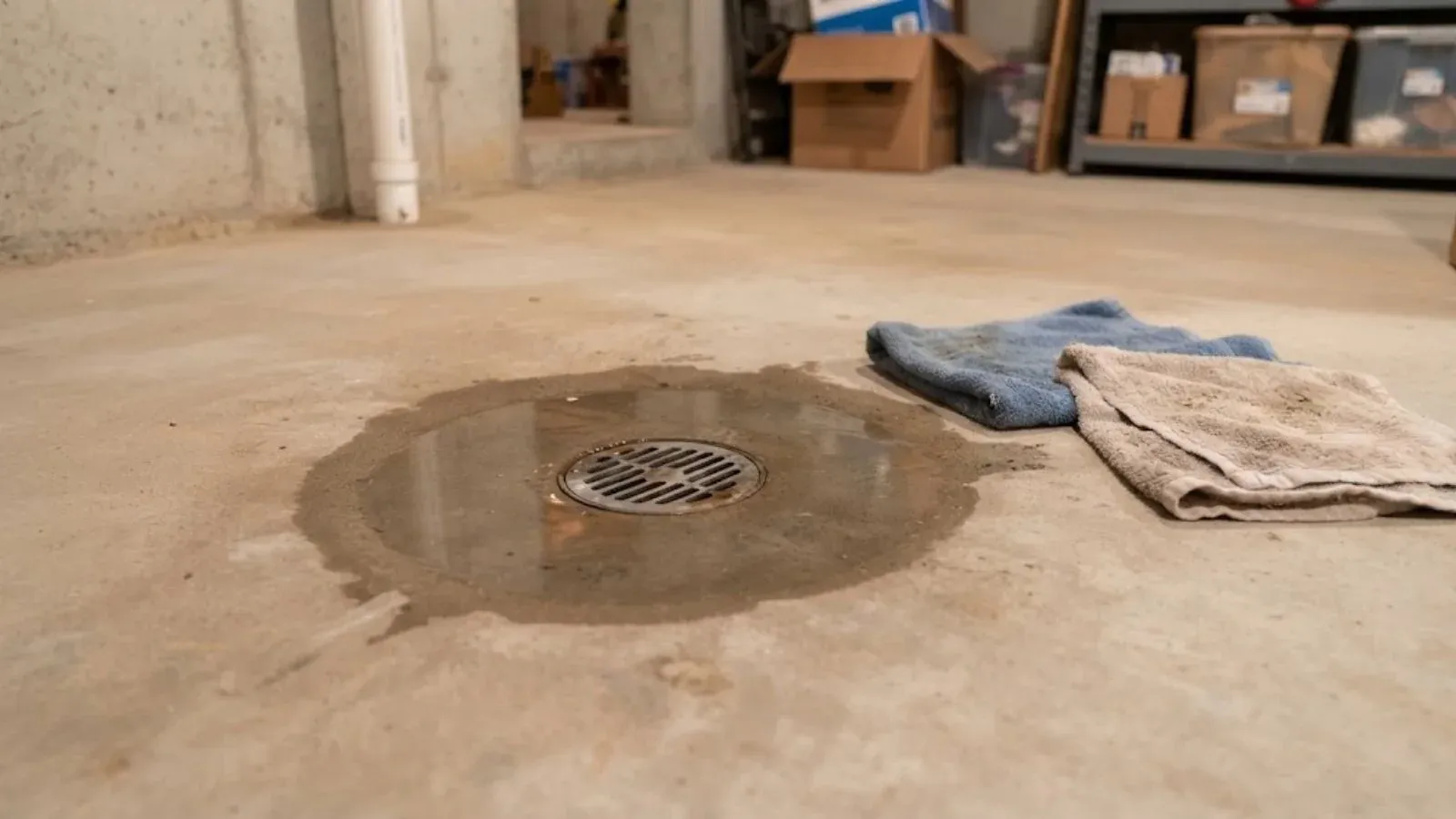
If sewage is coming up in your basement, stay out of the water and stop using every drain in the house. Do not flush, run the washer or take a shower, because each gallon goes to the same blocked line. Keep children and pets away, and do not touch outlets, cords or appliances that stand in or near the water.
Then call the 24/7 line. A sewer backup is urgent, and a plumber can ask the right questions over the phone while you wait. In Erlanger, KY, the cause is usually a blocked main or lateral, though a plumber has to confirm it. The steps below cover what to do, what to avoid and what to note before help arrives.
The first hour, in the order that keeps you safe
Do these in order. Skip any step that would put you in the water.
- 1
Keep everyone out of the wet area
Sewage carries bacteria and other contaminants. Stay out of standing water, and keep kids and pets upstairs and away from the stairs.
- 2
Stop all water use
No flushing, laundry, dishwasher or showers. Remind everyone in the house, since one flush can add more sewage.
- 3
Watch for electrical risk
If water is near the panel, outlets or appliances, stay back. Do not reach in to flip a breaker. Call your electric utility or an electrician about shutting off power safely.
- 4
Smell for gas
If you smell gas at any time, leave the building and call the gas utility on your bill or 911 from outside. Do that before you call a plumber.
- 5
Call the 24/7 line
Describe which drains are affected and where the water appeared. Say whether neighbors also have problems.
What not to do while sewage is in the house
Well-meant fixes often make a backup worse or put you at risk.
- Do not wade through the water to check the cleanout or the floor drain
- Do not run any drain again to see if it has cleared
- Do not pour chemical cleaners into a backed-up line
- Do not use a household vacuum on standing water
- Do not touch wet electrical equipment or extension cords
- Do not open the cleanout cap if sewage is high in the line
- Do not move wet contaminated items through the house without gloves and boots
Where the water shows up and what that suggests
Tell the dispatcher what you see. These patterns help a plumber decide where to look first.
| What you see | Likely cause area | Useful detail to share |
|---|---|---|
| Only the basement floor drain | Main line or lateral | Whether upstairs drains are slow |
| Floor drain and basement toilet | Main line blockage | What was flushed or run last |
| Several fixtures slow, then backup | Main line, building up | When the slowing started |
| Backup only in heavy rain | Public sewer or inflow issue | Whether neighbors are affected |
| Single fixture overflowing | Local branch clog | Whether other drains work |
This is a guide for the phone call. The real cause is confirmed on site, often with a camera.
SD1 and sewer backup help for Kenton County homes
Sanitation District No. 1 of Northern Kentucky (SD1) has a published Backup Assistance Program policy. This is SD1's published policy as of an older document, so confirm current terms with SD1. It describes financial help toward a backup prevention device, such as a backflow preventer valve or pump, installed by a licensed plumber. The practical step is to call SD1 to ask whether the program still exists before paying for a device.
That published policy says the property must have had at least two wet-weather backups within five years, verified by SD1. Backups from inadequate internal plumbing or a defective sewer lateral do not qualify, and the owner is responsible for the private lateral. So a camera report showing a clear lateral may matter, and a plumber's written findings are worth keeping.
SD1's Banklick Creek document says flooding has been a recurring problem in that watershed, which includes Erlanger. It does not say where backups happen, so do not assume your cause from the area. Tell the plumber when it happened and whether it rained, and let the camera answer the rest.
Source type: SD1 published policy document, SD1 Banklick Creek watershed document
Your private line or the public sewer
Knowing which side the blockage is on decides who fixes it.
Likely your private line
- Only your house is affected
- Slow drains came on gradually
- Backups follow certain uses, like laundry
- A camera shows roots, grease or a damaged pipe on your side
Possibly the public sewer
- Neighbors on your street have backups too
- It happens mostly during heavy rain
- Your own pipe looks clear on camera
- Water rises in several low drains at once
If you think the public sewer is involved, tell the plumber and contact SD1 as well. A plumber can document what the camera shows on your side.
What the plumber does after you call
The plumber confirms the cause, clears the blockage with a cable machine or jet, and runs a camera to see why it formed. Sewer line cleaning gets the water draining again, and the camera shows whether the pipe needs more than a clearing.
If the footage shows a collapsed or broken pipe, the next step is a full sewer inspection and a repair plan with a clear price before work starts. A plumber unclogs and repairs the line. Cleanup and drying of the basement is separate work, and the plumber will tell you where their part ends.
Record the damage and keep your paperwork
Once it is safe, take photos from the stairs or doorway of the water line, the affected rooms and any damaged items. Write down the time you noticed the backup, which drains were involved, and when you called. Keep any plumber's report and receipts.
These records help if you talk to your insurance company, but this page cannot say what any policy covers. Ask your insurer directly how to file and what they need to see before you clean up.
Quick Answers on Sewer backup basement first steps
Yes. Sewage can carry bacteria and other contaminants, and standing water near electrical equipment is a shock risk. Stay out of it, keep children and pets away, and wait for a plumber and, if needed, a cleanup professional.
Only if you can reach the panel without stepping into water and the panel itself is dry. If not, stay back and call your electric utility or an electrician. Do not touch wet outlets, cords or appliances.
No. Everything drains to the same blocked line, so upstairs water adds to the basement. Hold off on flushing and laundry until a plumber has cleared the line.
Yes. The 24/7 line is open nights and weekends, and same-day appointments are offered when available. Stop using water and stay out of the wet area while you wait.