
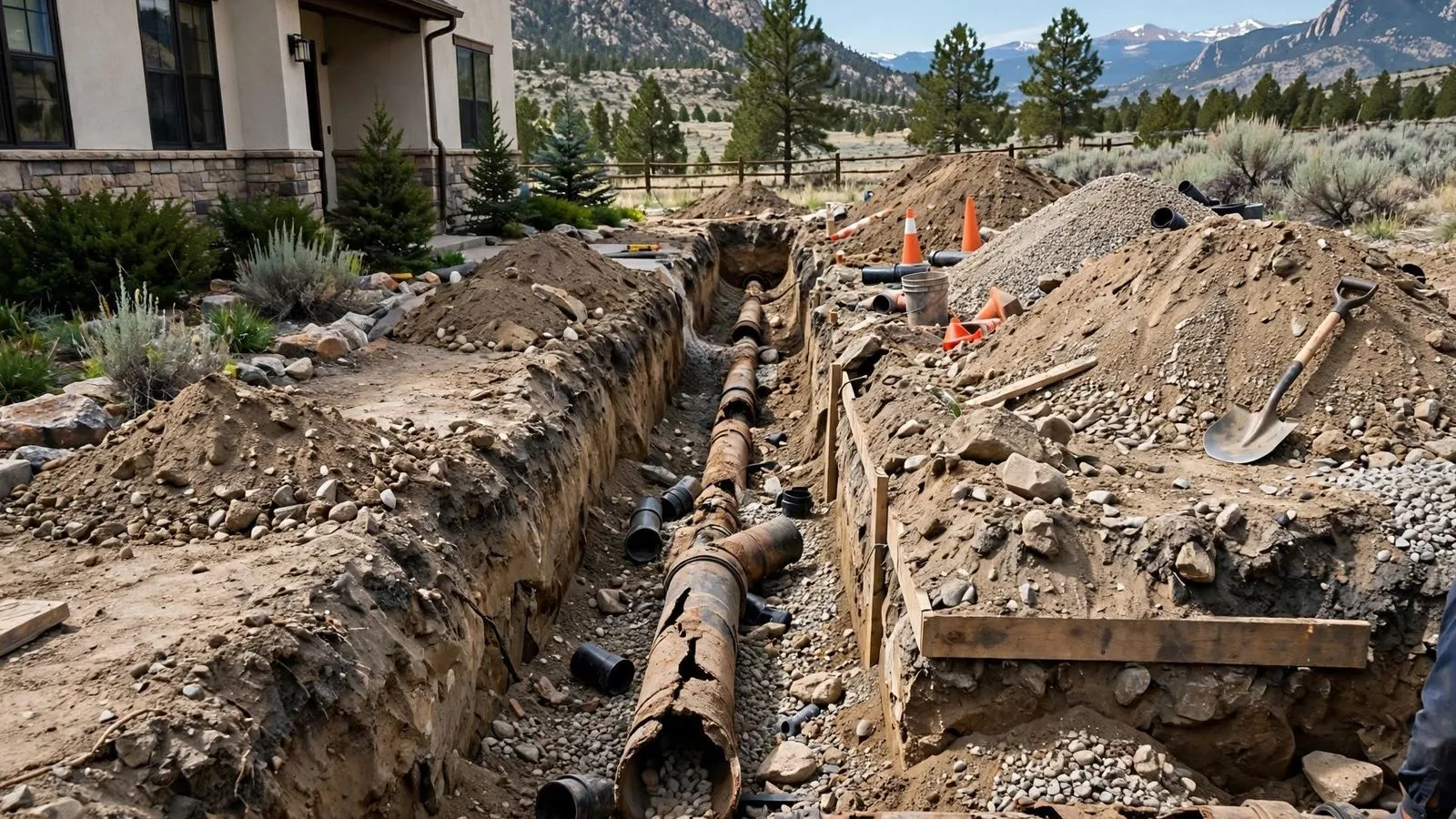
A main sewer line clog is a blockage in the one large pipe that carries every drop of wastewater from your house out to the sewer. The giveaway is trouble in more than one place. A toilet gurgles when the washer drains, the tub fills when you flush, or the lowest drain in the house backs up first.
In Erlanger, KY, the repair is usually a two-part job. A plumber clears the blockage with a cable machine or a hydro jet, then runs a camera to see why it formed. Until that happens, stop running water, because every gallon you add has nowhere to go.
The sections below show how to confirm the main line is the problem, what is safe to try, and when the clog points to a damaged pipe instead of a one-time jam.
Signs the blockage sits in the main, not one fixture
One slow sink is almost always a local clog. These patterns point farther down the line.
Several fixtures act up together
A slow tub, a gurgling toilet and a sluggish kitchen sink on the same day rarely have three separate causes. They share one exit pipe.
The lowest drain backs up first
Water rises at the basement floor drain or lowest shower before it shows anywhere else. Gravity sends the overflow to the lowest opening.
Flushing changes another drain
Bubbles in the tub or water creeping up a shower drain after a flush means the toilet's flow is hitting a blockage downstream.
Laundry makes it worse
A washer dumps a lot of water fast. If the floor drain burbles or overflows during a load, the main is struggling to carry even normal volume.
Gurgling and a sewer smell
Air pushed back up through traps makes noise and odor. A smell with no visible leak often means a partial blockage, not a full stop.
A ten-minute check before you pick up the phone
These steps tell a plumber a lot, and none of them require tools.
- 1
List what is slow
Write down every sink, tub, toilet and drain that is slow or gurgling. Three or more on different branches points at the main.
- 2
Test the lowest point
Look at the basement floor drain or the lowest tub or shower. Do not run water to test it if it already looks high.
- 3
Flush one toilet once
Watch the tub and floor drain while it empties. Movement or bubbling in either one is useful information. Then stop using water.
- 4
Find the cleanout
Look for a capped pipe, often 3 or 4 inches wide, in the basement, garage, crawl space or yard near the foundation. Note where it is.
- 5
Leave the cap on
If sewage is standing high in the line, removing the cap can release it all at once. Let the plumber open it with the right setup.
What a homeowner can try and what to leave alone
Some first moves help and some make a main line clog harder to fix.
Reasonable to do
- Stop laundry, dishwasher and shower use right away
- Check whether neighbors on the same street report problems
- Note the cleanout location and clear space around it
- Look at the roofline vent for debris if you can do it from the ground
- Write down when the symptoms started and what changed
Better left to a plumber
- Pouring drain chemicals into a line that is already backed up
- Opening a cleanout under pressure from standing sewage
- Renting a cable machine and feeding it into a line you cannot see
- Flushing again to see whether it has cleared
- Pulling a toilet to reach the line from inside
Chemical cleaners are the worst choice here. They sit in standing water, harden the exposure risk for whoever opens the line next, and rarely reach a blockage that is many feet away.
Who owns the pipe from your house to the street in Erlanger
Sanitation District No. 1 of Northern Kentucky (SD1) handles sewer service in this area. Under SD1's published policy, confirm current terms, the property owner is responsible for a defective or failing private lateral, including any inspection needed to confirm it is clear. That means a blockage in the pipe from your house toward the street is normally yours to deal with, so call a plumber first and SD1 for questions about the public side.
Kentucky's plumbing permit rules, 815 KAR 20:050, say no permit is required for cleaning waste or sewer pipes. They do require one for a new or replaced house sewer. Clearing a clog needs no paperwork, but if the camera shows the line must be replaced, ask the plumber who is pulling the permit before work begins.
Erlanger grew fast in the 1950s, 1960s and 1970s, after Interstate 75 opened up the area. Homes from different eras were plumbed with different drain materials, and older houses often have cast iron while later ones have plastic. Which one you have is a question for a camera, and the answer tells you whether jetting is a safe choice.
Source type: SD1 published policy, Kentucky 815 KAR 20:050, City of Erlanger history page
How a plumber clears the line and what the camera adds
The plumber opens the cleanout, or pulls a toilet if no cleanout exists, and feeds a cable with a cutting head toward the blockage. Roots get chopped, grease gets scraped, and a soft jam gets broken so water can move. For grease-heavy or scale-lined pipe, clearing the main line with a hydro jet washes the pipe wall more thoroughly than a cable can.
After the flow returns, a camera shows the pipe from the inside. That step separates a one-time jam from a pipe that will clog again. The camera can show roots entering a joint, a belly where water pools, a cracked or offset section, or heavy buildup.
What the camera cannot do
A camera cannot see through standing water or a fully packed line, so it often goes in after the first clearing pass. It also shows the pipe's condition on that day, not how long it will last. A plumber will tell you what the footage supports and what it does not.
Common causes and what each one usually calls for
The cause decides whether clearing is enough or the pipe needs more work.
| Cause | How it often shows up | Typical next step |
|---|---|---|
| Tree roots in a joint | Repeat clogs every few months | Cut roots, camera, then repair |
| Grease and wipes buildup | Slow drains that come and go | Clear or jet, change habits |
| Bellied or sagging pipe | Clears, then clogs in the same spot | Locate with camera, repair section |
| Cracked or offset joint | Soil or debris catching in the line | Spot repair or replacement |
| Foreign object | Sudden backup after a flush | Cable out the object, check line |
| Aging cast iron scale | Gradual slowing across the house | Jet carefully, inspect condition |
These are patterns, not a diagnosis. A camera inspection shows what is actually in your line.
When clearing is not enough and the pipe needs repair
If the footage shows roots pushing through a joint or a section that has collapsed, cutting roots only buys time. The pipe has to be fixed. Options include a spot repair, a lined section, or a full repair of the damaged run, and the right one depends on how much pipe is bad and how deep it sits.
A homeowner should expect the plumber to explain the choice and give a clear price before work starts. Ask what the camera showed, where the problem sits, and what happens if you wait. Repeated clogs in the same spot are the strongest sign that clearing alone will not hold.
Quick Answers on Main sewer line clog repair
Look for problems in several fixtures at once, especially the lowest drain in the house backing up. A single slow sink is usually a local clog, but a gurgling toilet, a slow tub and a bubbling floor drain together point to the main line.
It is not a good idea. Chemicals sit in the standing water above the blockage and rarely reach it. They also create a hazard for the plumber who opens the line afterward, so skip them and stop running water instead.
A straightforward clog may clear in one visit, with a camera run afterward. Heavy roots, a collapsed section or hard buildup can take longer or lead to a repair plan. The plumber will tell you what the line shows once the first pass is done.
It can if the cause is still there. Roots, a sagging section or a damaged joint will keep catching debris after the line is cleared. A camera inspection shows whether the clog was a one-time event or a sign the pipe needs repair.