
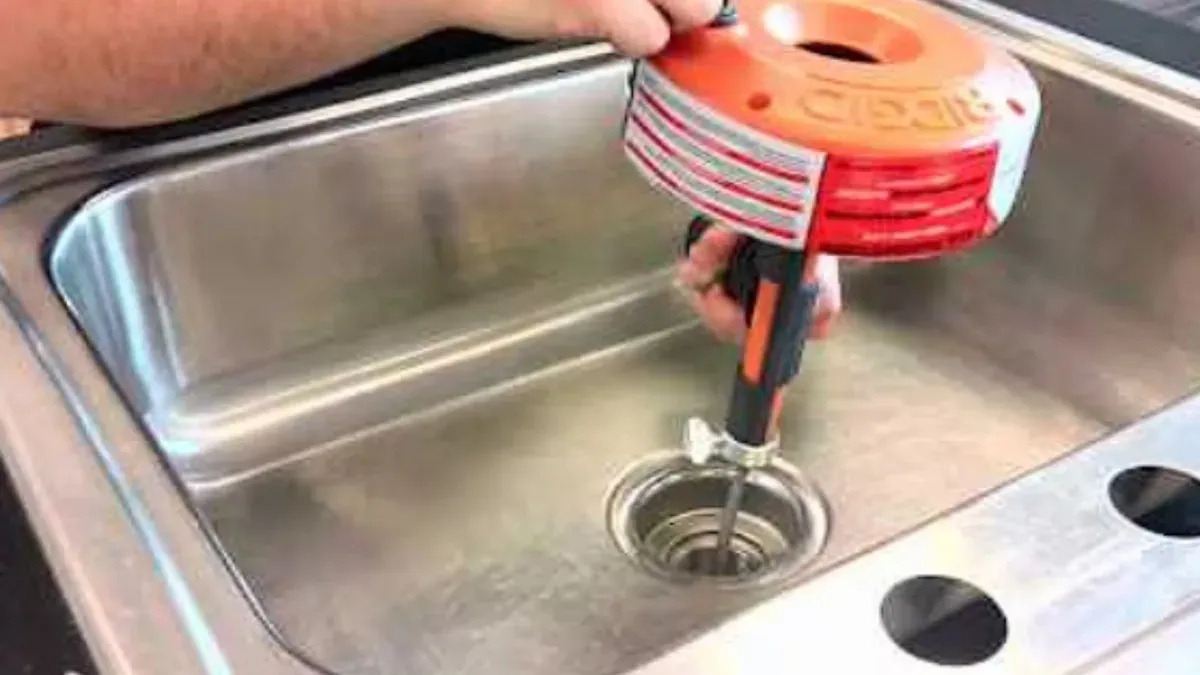
When drains are clogged in a house, the number of fixtures affected tells you where the blockage sits. One slow drain means a clog in that fixture or its short branch pipe. Several slow drains on the same floor mean a shared branch line. Slow drains everywhere, or water rising at the lowest drain, mean the main line.
In Erlanger, KY, that simple count decides your next move. A single clog often yields to a plunger or hand auger. A shared or main clog needs a cable machine or hydro jet, and trying to fix it with the wrong tool can make it worse. Here is how to read the pattern and what to try at each level.
Read the pattern: what your slow drains point to
Walk through the house and note every drain that is slow, gurgling or backing up.
| What is clogged | Where the blockage probably is | First move |
|---|---|---|
| One sink or tub only | That fixture's trap or branch | Plunger or hand auger |
| Sink and tub in one bathroom | The shared bathroom branch | Cable the branch, check vent |
| Kitchen sink and dishwasher | Kitchen drain past the trap | Remove trap, then cable |
| Toilet plus nearby tub | Branch line close to the main | Stop use, call a plumber |
| Lowest drain backs up | Main line downstream | Stop all water, call a plumber |
| Slow everywhere, gurgling | Partial main line blockage or vent | Call a plumber, camera advised |
These are starting points. A camera or a trial cable run confirms the real location.
The kitchen sink: grease, food and the garbage disposal
Kitchen clogs build slowly. Cooking grease cools inside the pipe, coats the wall, and catches food scraps until the opening shrinks. The sink drains more slowly each week, then stops. A plunger can move a soft clog, but a hard grease buildup needs cutting or jetting.
If a double sink drains one side faster, the blockage is past the shared trap. If the dishwasher water backs into the sink, the clog sits in the drain line both share. Pull and clean the trap under the sink first, because that is where debris collects, then decide on a cable.
Bathroom drains: hair, soap and what each fixture does
Bathroom clogs have their own habits. Match your fixture below.
Tub and shower
Hair and soap scum wrap into a plug just below the strainer. A drain tool or a short auger usually pulls it out.
Bathroom sink
Toothpaste, hair and the pop-up stopper catch debris. Remove the stopper and clean it before anything else.
Toilet
Too much paper or a flushed item blocks the trap. A toilet plunger or closet auger works. Repeated clogs hint at a deeper problem.
Floor drain
A basement floor drain that backs up is a main line clue. Do not keep pouring water into it.
Laundry standpipe
Lint and soap residue narrow the pipe. If it overflows during a wash cycle, the line behind it is partly blocked.
Why house age matters for drains in Erlanger
Erlanger was incorporated in 1897 and grew most quickly in the 1950s, 1960s and 1970s, with housing units rising from 6,865 in 2000 to 8,249 in 2020. Homes built across those eras were plumbed differently. In the US generally, older houses often have cast iron drains, while later ones use PVC or ABS plastic. A camera shows what your house actually has, and that tells you how aggressive a cleaning is safe.
Old cast iron can build scale inside, which slows every drain slowly over years. If the whole house has been getting sluggish rather than one fixture, scale may be the cause, and a camera before any jetting is a sensible step.
Your neighbors in Fort Mitchell and Florence deal with the same pattern question. Count the affected fixtures first, because that count decides who you call and what tool they bring.
Source type: City of Erlanger history page, Census and Wikipedia housing data, general US plumbing practice
Plunger, hand auger, chemicals or a plumber
Each tool fits a different clog. Using the wrong one wastes time and can damage a pipe.
Worth trying at home
- A cup plunger on a sink or tub with the overflow blocked
- A flange plunger or closet auger on a toilet
- A small hand auger for hair clogs near the opening
- Hot tap water, not boiling, to loosen soft grease
- Cleaning the trap and stopper by hand
Time to call a plumber
- More than one fixture is affected
- The lowest drain in the house is filling
- The clog returns within days of clearing
- Gurgling sounds from drains you did not use
- A plunger moves water but the clog never clears
Skip store-bought chemical cleaners if you may need a plumber afterward. They leave harsh liquid in the pipe, which is unpleasant and unsafe to work around.
A safe order of attack for a single clogged drain
Work from the easiest step to the hardest, and stop if the problem spreads to another fixture.
- 1
Check what else is slow
Run water in a second fixture on the same floor. If it is also slow, stop. This is not a single-fixture clog.
- 2
Clear the visible part
Remove stoppers, strainers and hair from the opening. Many bathroom clogs end here.
- 3
Plunge with a good seal
Fill the fixture with a little water, block the overflow and plunge with steady strokes. A weak seal does nothing.
- 4
Clean the trap
Place a bucket and loosen the slip nuts on the trap under the sink. Rinse it out and reassemble snug.
- 5
Try a hand auger
Feed it gently and turn the handle. If you hit a hard stop or the cable keeps kinking, stop and call for help.
What a plumber does that a hand tool cannot
A plumber uses a motorized cable with cutting heads for the branch and main lines, which reaches farther and cuts through roots and hard grease. For heavy buildup, hydro jetting flushes the pipe walls with high-pressure water, not just a hole through the middle.
Professional drain cleaning also includes diagnosis. A camera shows whether you have a one-time jam, a scale-lined old pipe, a bellied section or roots. That tells you if the clog will return, and what to do so it does not.
Quick Answers on Clogged drains in house
When every drain is slow, the shared line is partly blocked, usually the main. Scale, roots or grease can narrow it. Stop heavy water use and have a plumber run a camera to find the cause.
Not usually. Boiling water can soften or warp PVC joints and crack a porcelain fixture. Hot tap water is enough to loosen light grease and is safer for the pipe.
The cause is probably still there. Hair deep in a trap arm, grease on the pipe wall or a damaged pipe section keep catching debris. A camera shows which one it is.
The floor drain is usually the lowest opening, so it shows a main line blockage first. Stop using water and call a plumber, because more water only adds to the backup.
Not by themselves. Many older homes have cast iron drains that can scale up and slow, but a camera is the only way to know the actual condition of your pipes and whether cleaning or repair fits.